Showing posts with label Goa. Show all posts

Tuesday, 15 July 2014

"Hello Teacher!" the rewards of volunteering in India


COUNTRY: India
PROGRAM: GapBreak
PROJECT: Teaching & Car Work
WRITTEN BY: Cassy Miller-Crispe

Four planes, 5 taxis, 2 buses and a Tuk tuk later and I had arrived in Marjorda, Goa. Of course the journey straight to Goa would not have taken that long, however I chose to do some traveling before starting my Antips placement. Everyone had said to prepare for sensory overload upon arrival in India, and they were definitely not exaggerating! The sights, sounds, smell and feel of India hits you the moment you get off the plane. Sweet, sour and spicy smells come from each direction and you’re blown away by the chaotic nature of the roads.

The road to Goa turned from chaotic city roads to beautiful green landscapes dotted with houses and apartment buildings, some teeming with life, others abandoned, left to be recaptured by nature. Arriving at the camp, I was welcomed by a number of smiling staff members, each of whom introduced themselves and chatted happily to me. The camp itself surrounds a large green grassed area with hammocks and a volleyball court. It felt instantly welcoming and homely.

The rest of the volunteers arrived a few hours later, and we ate a delicious first meal of dhal together. After introductions were made, we had our orientation and learned of our placements. I would be working at the school for handicapped children.

The next day we were taken on a tour of the town, showing us the beach and markets, followed by a hindi lesson. For the next few days we began our placement in the morning, followed by activities in the afternoon, such as yoga lessons, a Bollywood dance class a cooking class, dinner with the host family and henna lessons, it’s safe to say we had a pretty busy week!

By far the most rewarding is turning up to school each day and seeing your students smile and say “hello Teacher”. They are excited you’re there and want to work with you, and each smile you receive makes you want to try even harder. Don’t get me wrong, its a big challenge to engage the students and keep the focused, but what would volunteering be without a challenge! Overall the beginning week has been incredible and I am looking forward to the next few weeks of placement!

Friday, 24 January 2014

There's chapatti in my mouth and everyone's welcome! Continued tales from Goa


COUNTRY: India
PROGRAM: UniBreak
PROJECT: Teaching & Care Work
WRITTEN BY: Sally Kirk

First free weekend in Goa: “It’s my chapatti, and I’ll buy 5 kilograms of chai tea if I want to”, alternatively dubbed, “Dinner time in Goa: There’s a chapatti in my mouth, and everyone’s invited. Except you, dodgy street cart food. You can stay home.”

So the past couple of weeks have been completely insane.

Friday

After spending both Wednesday and Thursday night at Majorda beach, we decided to spend our first Friday evening at Colva instead. Half of us browsed the market stalls, while the other half ventured off to the beach.

Colva in general is much busier, and much more touristy than anywhere we’d been so far. Majorda beach is populated almost exclusively by Russian tourists. Owners of the cafes and bars along the beach seem to all already know we’re from “Idex?! Idex?!”, and treat us with discounts accordingly. I’m not complaining. Yesterday, the owner of the beach cafe we usually go to presented us with this sizeable reward for being Not-Russian and Purchasing-hefty-quantities-of-iced-tea-on-a-daily-basis.

Apparently, something like 4 out of every 5 tourists in Goa are actually Indian. Charlotte and Trisha, after going swimming at Colva beach, said that they felt very aware of how much they stood out in their bikinis. Even moving along up the beach, they were followed by gaggles of Indian tourists, all staring, and many taking not-so-sly photos from a not-so-distant distance. Some even asked if they could have pictures taken with them. It’s true that, while at first you feel like a bit of a celebrity, the eyes of strangers bearing down on you quickly starts to feel intrusive. Then again, we are constantly snapping photos of women in sarees packed onto a motor scooter, carrying water on their heads, or gathered next to a particularly picturesque fruit stall. Things that are strange and beautiful to us, but insignificant in the daily lives of the locals here.

We met up with the others for dinner and, after waiting around for almost 2 hours for a place to seat 11 people, we ate at what was probably the best Indian restaurant I’ve ever been to. The curries were served in ornate silver pots, like little steaming bathtubs, and the collective mountain of roti we ordered was so fresh, so doughy and warm, I just wanted to wrap it around me like a giant cocoon, and live in it’s belly forever, and have it suffocate me with love and puffiness.

Saturday

Saturday was a packed day. In the early afternoon, we went on a tour of a spice plantation, where we walked through beautiful forests and learned about the properties of a range of plants (cinnamon, lemongrass, nutmeg… apparently every second spice is either an aphrodesiac, a miracle skin treatment, or “makes you on the high”). Our tour guide also brought us shots of Feni to have before lunch – a local Goan liquor, made from cashew fruit or coconut, and about 40% alcohol. Hours after lunch, Celina (one of the project-managers from the camp) said very aptly, that she could still feel the Feni “dancing on her head”.

The boat cruise that evening was…. Memorable. We spent 3 hours on this big, rickety boat, an enthusiastic DJ introducing us to a series of traditional Goan dances, performed by four not-so-enthusiastic teenagers. The DJ then invited first the children, then all the couples on board to come up on the dance floor and “hold your partner as much as you love them” (All you single people…. You can just sit there in the corner. Yes, there. No, don’t smile. Stop moving. It’s not your turn, dammit. Drink your Feni.) After venturing below deck to brave the bathroom situation (verdict: ohdeargodwow. It was wet), Jess and I ran into the boys from dance troupe. A little star struck, we giggled and stumbled around as they attempted to teach us some form of Portugese salsa – before some guy yelled at them in Hindi to get upstairs, and stop fraternising with the (very uncoordinated) boat guests.

Sunday
After watching the sunset, Charlotte and I (geniusly) decided to walk back to camp, keen for some exercise after a week of overloaded dinner plates and hammock-dwelling. For the second time in two days, we got horrendously lost. In hindsight, it was pretty predictable – we’d never walked before, didn’t know the way, didn’t have a map…. but had been told it was “pretty much a straight line” from the beach back to Idex (unclear in exactly which direction this was…. We cleverly decided to wing it #universityeduation #qualitylifechoices).

Week Two on the Projects: The Government School
The teacher was absent for the entire week at the Day Care centre (for a variety of reasons – from a family dinner party to a wedding, to delivering nutrition supplements to the homes of the kids in the daycare class), and we had an average of 20 kids attending each day. Needless to say…. We were on struggle street.At this point, I’m getting to know each of the children though, and it makes each day that much easier. The

The most difficult thing about teaching at the government school is, when there’s always such a range of ages and ability, it’s difficult to cater to all the kids at once. Either we’re singing the colours of the rainbow, and the smarter kids already know it all, or we try something more advanced, and the littler ones are instantly lost and mute (or, in the case of the 2-year-old boys, tackling and tumbling over each other on the carpet)

Adolescent Girls
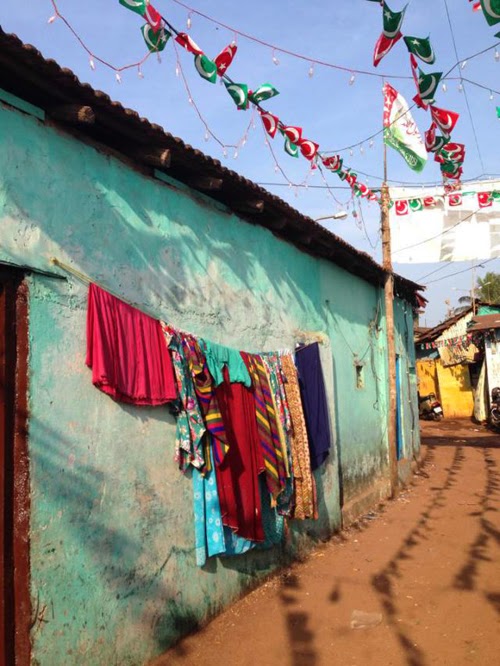
It’s quickly become my favourite time of day – when we pull up at 2.30 to the rubbish heap outside, and the girls are all gathered there, waiting to grab our hands and lead us to the classroom. It’s such a vibrant community, always so full of life and optimism. Everybody smiles and waves to you in the streets, and there always seems to be some kind of celebration going on. On Tuesday, we had a public holiday for the Muslim festival of Eid. As Monte Hill is largely a Muslim community, the entire place was decked out in fairy lights and vibrant flags, all red and green little moons, constantly waving and pirouetting in the breeze. All the girls were scrubbed up beautifully in their sarees and best salwar kameez (patterned tunics with matching pants and scarf).

Before we went to class, the volunteers were invited into the home of the family who usually host the Adolescent Girls class. We sat on their rug, and they served us some Falooda (a milky, rose-flavoured beverage) and stuffed puri (homemade pastry, filled with a sugary lentil dal) – traditional dishes cooked for the Eid festival. It continues to amaze me how hospitable the Goan people are. Less amazing for my waistline though. The health kick starts…. tomorrow.

I can’t imagine what it will be like to leave these girls in just two weeks. It’s strange to think that I’ll go home, back to my normal life, and they’ll still be here, growing up. Becoming older, more beautiful, getting better at their times tables and at henna and homemaking. In only a few years, some of them getting married.

This weekend, we’re heading down the coast to Palolem beach, apparently one of the must-see tourist destinations in Goa. It’s renowned for it’s sweeping white sands, lined with palm trees and beach-front bars. We’re staying in little huts just along the shore line. I am far too excited for this.

Edited by Antipodeans

Tuesday, 21 January 2014

Goa And Get Lost - Beaches, Chai and all things India!


COUNTRY: India
PROGRAM: UniBreak
PROJECT: Teaching & Care Work
WRITTEN BY: Sally Kirk

Part 1: Life in Transit

It’s 2am and I’m only 8 1/2 hours into an 18-hour plane trip. Already my neck is cramping, my eyes are sore from too many in-flight moviess and the stench of desperation wafting from Singapore’s airport bathrooms is overwhelming.

Around the terminal, sleeping bodies are curled up against walls and clutching their valuables. Others wander the halls, wiping sweat from their faces. It’s no Love Actually opening scene but at least I have a chup-a-chup. Plus the lady in the M&M store upstairs gave me free samples so I’m good to go!

I’m on my way to Goa, India with nine other kids around my age.

India - it’s big, it’s different, it’s loud, colourful, crowded, wonderful, crazy, smelly, incredible... at least that’s what I’ve heard. For a travel-novice like myself, I have no idea how to even picture it.

I haven’t been overseas since I was little. The first time I remember even getting on a plane was around five years ago when my family flew up to the Gold Coast for a week and my three sibilings and I fought tooth and nail over the window seat. Now, traveling OVERSEAS! ON MY OWN! - That level of excitement still hasn’t worn off.

Part 2: The Amphibian Saga, or, “Are we there yet?”

On the next leg of my trip, The Toad Man (as I affectionately named him), snorted and snarled throughout most of our overnight journey from Singapore to Mumbai - snoring and gargling in his slumber, only pausing occasionally to dribble fish curry onto the armrest between us.

My irritation was poorly veiled. I tried to fashion a hat-earmuff thing out of my scarf and pillow – needless to say, it looked very attractive but sadly, did nothing to block out the symphony of snorts.

Part 3: Arrival, or, 9-hours-in-Mumbai-airport-being-slapped-in-the face-by-heat-exhaustion-and-language-barriers.


At Mumbai airport, I spent two hours trying to make my way through customs - pleading for directions from officials who spoke only Hindi.

After waiting in another queue for five million years, I was informed that I’d have to wait another two hours before I could actually check in. At this point (hot, bothered and only just holding onto my sanity) I ran into two other girls from my Antips group. Monique and Megan had spotted me slumped against a wall near the check-in counter (who/what is that red-faced, blonde-afro girl/thing over there, turning on the spot and panting attractively? Isn’t she in our Antips group? I could have sworn, on Facebook, she looked a little less…. Manic?) and took pity on me. Bless them.

We spent eight hours in layover together, skipping the small talk and braving the “CafĂ©-Chino!” (the only coffee available at Mumbai airport). After the first hour, I’d calmed down a little but the afro-situation remained problematic.

From Mumbai airport we had a limited view of the city – except to see that it was huge! We could see the slums, cramped up against the distant wire fence - rusting tin rooftops jostling for a position, all about the height of a person. Almost immediately behind there were some taller buildings – comparatively luxurious hotels, tall and clean. I’ve been told before about this kind of juxtaposition in India – cities full of different demographics, mixed up and thrown together. I didn’t expect it to be so obvious or to be exposed to it so soon.

Driving Miss Daisy: Goa from the airport.

Having finally made it through Mumbai airport, we arrived in Goa to a much more mellow scene. Sans obstacles, we were waved through the gates into the smoky haze of the parking lot where Shivram, the assistant manager at the camp, was waiting. We were whisked away in a huge, old box-jeep (notably lacking in seatbelts) onto the highway, where we whizzed past billboards, palm trees, motorscooters, roaming cattle and pedestrians wandering on the side of the road.

Speeding through Goa for the first time (whilst trying casually to pretend I’m not holding on for dear life) I was overwhelmed by the varity of colours (and the number of cows!) Bright splashes of coloured houses appeared between the palm trees; vibrant shades of pink, yellow, purple, orange, green, white-with-blue-trim, red-with-white (a candy cane house!)


From when we landed in Mumbai, I decided to start making mental notes of all the things that are different here but in Goathere’s no comparison. Nothing is comparable. The roads, the houses, the trees, the weight and colour and smell of the air around us - nothing is recognisable and everything is wonderful.

Camp Idex: Chai, Camaraderie, Hammocks, Chai, Bonding and Chai.
There are nine Antips volunteers staying in the camp at the moment but twenty-something volunteers in total. Most of them are from Europe and around the same age. So far, all of them have been lovely.

It helps that the camp is beautiful, and the food, OH MY LORD, so incredible. We’ve even gotten used to the cold shower – always much needed after a sticky day of volunteering - and the western toilet in each room is a blessing.

Dinner and lunches at the camp usually involve some form of naan or roti and rice, two kinds of curry, salad and something sweet. At first, the different pans of food were so unrecognisable and I was so overexcited to not be eating aeroplane food, I kept unknowingly mixing in the desserts with my curry…. papaya and custard combined with spiced eggplant and dahl was, let’s say, an intersting cullinary experience but not necessarily one I’d recommend to a friend.

Five o’clock, Chai o’clock


In the evenings before dinner, a wonderful thing happens. Chai tea here is more than a beverage. It is an out of body experience. It is a sweet, creamy, spicy dream in which you are transported from your sticky, cramped, laboured body to a place amongst the angels of wisdom and joy and a blissfully unknown-calorie-content.

At mealtimes, the Antips crew and the other newbies are a collective broken record. The only phrases we can really utter are variations of OOOOOHH MY GOD, the food is SO GOOD! That thing was SO CHEAP! The children are SO CUTE! The houses! The cows! The shops! The clothes! The sunset is SO PRETTY! Look at this photo! Look at this photo! THE FOOD IS SO GOOD! (Oh but it really, really is though)

Similarly, every time the Chai pot emerges from the kitchen our conversations are put on hold for at least 20 minutes, as we cradle our steaming mugs.


Day 1: Cameras out, Tourist mode: On


On Monday, we began our initiaiton into the sensory whirlwind that is South Goa. First we visisted Old Goa where we toured the church of Bom Jesus Basilica, a UNESCO world heritage site built in 1594.

Our guide, Jeronimo, told us about the Portugese-Catholic history of Old Goa and the story of St Francis Xavier, a famous Portugese saint whose remains are now displayed at the church. I found this all fascinating, so I’m going to parrot it off here as best I can...

Xavier spent a number of years as a missionary in Goa, working to “restore the faith” of the Portugese settlers who arrived in India some 30 years previously.
After travelling and evangelising throughout Asia, Xavier died of dysentry on a boat voyage to China in 1552. He was buried on the beach of a nearby island and when others returned to collect his bones (to be re-buried at his place of birth), the body was found in almost-perfect condition! The men who dug it up hypothesised that this was because of the salt in the island soil and so to test this theory, buried him again in Portugese Malacca. When they dug the body up again nearly five months later, it was again found in almost perfect condition.

Understandly, this is when everyone proceeded to flip out.

I can’t really remember a lot of the story after that… doctors and other experts performed a variety of tests on the body, trying to ascertain how it had been so perfectly preserved to no avail. It must have been magic!

The body was later brought here to Goa where it was initially displayed to the public. People came from Portugal and all over Asia to see and pray at the memorial and many would steal locks of hair, fingernails or skin from the body as souvenirs. Others tried to prick his skin, curious to see if they could draw blood. When Xavier was pronounced a saint, his left arm was cut off (the arm he used to baptise his converts) and sent to the Vatican as a holy relic.

Now the remains are still kept in this Old Goan church – the body now contained in a silver casket and perched high on a ledge at the front of the church. The casket is only brought down every ten years – due to come down again in November this year – when many more tourists and religious figures will make the pilgrimage here to celebrate the occasion.

After the church, we visited a Hindu temple, saw a Bollywood movie and browsed the nearby markets.

In the large shopping mall beneath the cinema, we had our first encounter with Indian street beggars – a gaggle of children who followed us to our car, pulling on our arms and gesturing, with pinched fingers to their mouths (signalling food, food!) It was difficult to ignore but we'd been told "don't give money to the children who beg for it, 99% of the time they are working for someone else. They will not keep the money. They will stay hungry. It is the kindest thing you can do". It was entirely predictable and entirely heart wrenching.

MTV Cribs, aka. Crib, Sweet Crib.

The Christmas decorations in the streets around Goa are, to put it as eloquently as possible, off the chain. I was initially surprised at this – I hadn’t expected a Christian holiday to be so widely celebrated in a predominantly Hindu/Muslim country. Compared to the rest of India, though, Goa does have quite a high Christian population (around 27% Christian, to 66% Hindu) due to the occupation of the Portugese from the early 1500s.

Although this has been in steady decline over the past century, the historical influence of Portugese Catholicism remains visible - in the local culture, as well as the many churches, and insane Christmas decor around Goa. Every second house is decked out with strings of these huge, star-shaped lanterns – about twice the size of my head.

The house we visited for our yoga classes was on a street lined with lanterns, with a huge (9 or 10 feet), cotton wool snowman.

On our first night here, Katrin and Malaya, (two German girls already staying in the camp) told us about this crib competition: a war of the wits between the residents of Goa. The “cribs” are these huge, near-life-size nativity scenes constructed out the front of each participating household, each competing for the most extravagant and creative interpretation of the Christmas story.

The one we visited at the Little Heaven Orphanage today was like a makeshift playground for the children and included a real-brick, mini-Taj-Mahal, about half my height.

The judging of the crib competition is tomorrow, apparently. We’re all waiting with BAITED BREATH but all the cribs we’ve seen so far are spectacular.
The fairy lights strung across my hedges at home pale in comparison.

Day 2: Project visits


We spent today making brief visits to some of the projects we’ll be working on over the next month. Each of us needs to choose a morning and afternoon placement we want to work on.

In the mornings there are a number of teaching placements at the local Government School, day care centre, the Little Heaven orphanage, the Fishermen’s village school, and English classes at the Monte Hill slum. In the afternoons, we can choose between women’s empowerment workshops, adolescent girls, and “Drop out girls” classes (all in the Monte Hill slum) as well as a high school “bridging course” at the orphanage, and painting/building projects in the orphanage and government school playgrounds.

I KNOW. Just reading that, I’m feeling exhausted. And to have to make a choice between all of these? Wish me luck with that.

Day 3: Observation Day

Morning project: The Government School

At the government school, Monique and I are working with local kids aged between 2-5 (the pre-school), while Megan is next door with the older children.

This morning was intended to be an “observation day” on the projects, however since our teacher’s usual helper was absent, she had to cook lunch for the children herself - disappearing into the kitchen for about half an hour and leaving Monique and I to supervise over 20 clamouring pre-schoolers. Neither of us spoke any Hindi, let alone Konkani (the local Goan language), so our spontaneous “lesson” proved quite a struggle.

Shivram has since taught us enough Konkani phrases to communicate a little better with the kids tomorrow –if only to tell them to “boss… BOSS!!”.

I’m looking forward to getting to know the kids a little better – at the moment they’re just a blur of excited faces, and a whole lot o’ NOISE. It’s difficult to know how much they understand. Before they learnt either of our names, they’d all try to attract our attention with a constant stream of “HelloHello! Hello! HelloHello!” or, “teacher, teacher!”

Afternoon placement: The Adolescent Girls

In the afternoon, I visited Monte Hill to meet with the “Adolescent Girls” group. The group is of around 12 teenage girls from the slum, who meet for two hours to finish school work, learn English and socialise. Beverly, the project manager, is wonderful with them - she’s only my age and an incredible mentor. Today, we helped the girls with their homework and planned out study timetables for their upcoming exams. Tomorrow, we’ll have an English lesson where I’ll attempt to teach them “vowels”.

Only now that I’ve started trying to teach English, I’ve realised how little I understand of my own language. Like explaining why “soup” and “paint” and “bread” are plurals (A pencil. Some pencils. Some [not “a”] bread.) or why it’s “an umbrella”, but not “an unicorn”. And then explaining what a unicorn is to a sea of blank faces. Hopefully I’ll get better at this.

The girls, however, are SO keen to learn. At the preschool, the children had clambered over eachother to shove drawings of rainbows and “HELLEPHANTS!” in my face, pulling and scratching, and clamouring for approval. The afternoons are much quieter by comparison but the girls still seem to have endless reserves of energy. They are so happy, so close-knit. They laughed almost non-stop the entire two hours I was there and chattered away incessantly with Beverly, joking, pushing each other around and laughing at my attempts to contribute in Hindi.

I was initially apprehensive about getting involved with the classes at Monte Hill, particularly being the only volunteer on this placement. I thought that the slum would be so much more depressing, or confronting, or SOMETHING, than it has been. Some of the volunteers have found it a little that way – but more than anything, I’ve found it so encouraging. The worst thing I can think of so far is the rubbish heap out the front entrance – that thing reeks to the high heavens. Inside, though, it is nothing like I expected. Eye-opening, yes, and challenging, definitely. But the people are wonderful, always greeting us in the laneways, coming up to take our hands, introducing themselves and eager to show how much English they know. The women and children are beautifully dressed – all in bright sarees and matching sequinned pants. The houses are tiny, tin-rooved, with bare or tiled floors but similarly kept with such pride. The people and the place are filled with so much spirit. I feel so empty and whiny in comparison. I can’t wait to keep coming back here.


Majorda Beach: From Where You’d Rather Be


The past couple of nights we’ve made the trek down to Majorda beach for the evening. On the beach, there is so much to do – jet-skiing, para-sailing, horse-riding.

Although it’s technically winter here, it’s peak season in Goa (there are monsoons through the summer), so there are thatched-roof bars and restaurants open and deck chairs set out all along the beach.

At this time of day, though, the beach is very quiet. We swim, order too many ridiculously cheap cocktails and watch the sunset. I know, I know. I’m jealous of me too.


IN CONCLUSION (Yeah, I know... FINALLLY, right?)


I’ve just realised this entry is nearly 4,000 words long, for which I respectfully say, #sorrynotsorry. This doesn’t even BEGIN to describe the range of sights and experiences and emotions that have absolutely ASSAULTED my brain over the past few days.

I’m currently trying to finish off this post while sitting outside in the hammocks, everyone else chattering around me about our respective days on the projects (it’s 10 minutes ‘til Chai time). I am distracted and everything is warm and breezy and perfect. Even after an entire day on the projects, exhausted, it’s so easy to slip into this vacation-mode.

I almost feel guilty… Aren’t I supposed to feel like I’m giving up something? My time? My energy? Even on the projects, I feel like the children and the girls are teaching me far more than I’m teaching them.

Right now, it’s time for Chai and dear blog-reader, that is something that simply can’t wait.

Until next time, Sally.

Tuesday, 7 January 2014

Aventures In Goaland (Part Four - Goan, Goan, Gone)


COUNTRY: India
PROGRAM: UniBreak
PROJECT: Teaching & Community Healthcare
WRITTEN BY: Paige Hetherington

16th – 22th December

Hello. Welcome to the final installment of Adventures in Goaland. Your volunteers have all arrived safety home (except for Sarah who is still travelling) and have begun reveling in luxuries such as hot water and the ability to flush toilet paper.

Summary: Your blogger says her goodbyes and attempts to fly home.

Day 22 – Monday
Cow count: 22

The day did not begin very well as the night before there was a wedding in full swing nearby, complete with spotlights and room-shaking music that carried on well into the next morning. Tired, we wandered down to Colva in the afternoon and I learnt a lesson I’m not likely to forget soon. I was looking at a bracelet in a jewelry store and the first price offered to me was 2500R. I only had around 1000R on me, and I said so before walking out. At this point, the store owner accepted my offer. So, I have most likely been haggling terribly for the past four weeks (it’s funny the things you learn when you’re about to leave – like the fact that Majorda beach offers yummy sandwiches, juices and prawn crackers).

Day 23 – Tuesday
Cow count: 0

You don’t see any cows when you don’t actually leave the camp. I stayed put today since I came down with a cold – not something I considered when coming to India (despite it being ‘Winter’). Everyone was wonderful and I had numerous offers from people to go to the shop for me.

Day 24 – Wednesday
Cow count: 33

I went to both my placements today and the morning session was quite peaceful. The afternoon session was sad for us since it was our last one. I had a little party with the adolescent girls and I spent the first half an hour having henna applied to both my hands. Having henna applied is fascinating since they do it free-hand out of something that resembles a piping-bag and it still turns out beautifully. The girls gave me a beautiful card and a pair of earrings. The girls danced and laughed and seemed to enjoy the ‘party’. They are such sweet people and I hope their lives are happy.

Day 25 – Thursday
Cow count: 21

We get another public holiday for Goa Liberation Day. After we woke up, ate and lazed around for a bit, we started Rangoli. Rangoli (basically) involves outlining a picture on the floor and filling it with coloured flowers. These pictures are usually created for Diwali (the “festival of lights”) or to welcome someone to your home. I was teamed with Maddie and Renee and we made an elephant (my contribution was a beautiful sun). Then we decorated our camp Christmas tree. We spent the afternoon together relaxing on Majorda beach.

Day 26 – Friday
Cow count: 11

It was sad to say goodbye to the children I had been working with for so long but I’d be lying if I said I didn’t want to be home. I brought in some bubbles as a treat for my last day and they were all so happy and screaming. One of the little boys was just standing at the edge smiling (so I made sure to blow him some extra ones).

Then we had to complete our reports for our projects as it’s important to keep the records updated. While writing, I started second-guessing myself by wondering if perhaps I could have done more or done some things differently.

Some of us set off for Majorda beach for one last time. We spent our last night playing card games in the Rec Room before having an early night (we are, apparently, known as the “Australians who go to bed early” – with good reason) as we were going to have a very busy morning (and night, and morning and night again).

Days 27 and 28 – Saturday and Sunday

Cow count: 0

Having no running water for a short period in the morning should have warned me that our journey home wasn’t going to be as easy as I’d hoped. Once we had running water (and sort-of flushable toilets), the morning was lovely as we breakfasted together for the last time then packed and cleaned our rooms. Renee was the first to depart as she was spending the weekend in Palolem before she flew out on Monday. Jen and I were the next to go and the hour before we left seemed to tick by so slowly – then too fast. After some farewell hugs, Jen and I hopped in the jeep for our last bumpy trip along the dirt road.

After a long journey home, I was probably too eager for our first view of Adelaide and was grinning like an idiot when I saw it. It was perfect and it was home. I managed to hold in my relief (and desire to burst into tears) upon seeing my Mum and walked around to hug her. After a sad farewell to Jen, we drove home where my Grandad and brother were waiting to meet me. I told them all about my trip and showed them all the things I’d bought. Sleep was the furthest thing from my mind but after a glorious, hot shower I eventually slept. Waking up the next morning would mean that it was over and as much as I wanted to be home, I didn’t want the adventure to end. But everything ends eventually and it means that something else can begin.

Overall cow count: 87


Over the past week, people have consistently asked me what I’ve learnt from the experience and if it was worthwhile. Although I know some of my entries have been negative, I’m never going to regret my time in India. I’ve met some amazing people and seen some amazing things and I’d like to think I’ve grown as a person. We’ve complained that we can’t see the results of our time here but maybe we’ve started something that over the years will come to benefit the community enormously. Maybe all we did was give one child a positive memory that they’ll keep for their entire lives. Maybe we were kind to someone who was feeling down and gave them hope again. We are all part of a much bigger picture with a much bigger, collective goal. All we can do is our best to make a positive difference – knowing that the final result will take time but that it will hopefully be everlasting.

I doubt I have learnt anything earth shattering that hasn’t been said before, but now I understand all the life lessons we’ve read about – being grateful, being kind to others and living each day fully – with a positive attitude and with no regrets. Most importantly, I’ve learnt that no kind gesture, no matter how small, goes unnoticed.

I’m proud of what we’ve done here and how we’ve grown. I’m not sure how it would have been with a different group of people and I don’t want to know. Sitting here, it’s hard to picture not waking up and having breakfast outside with everyone, wandering off to our projects and chatting, supporting each other and brainstorming over lunch.

India has been incredible. It’s vibrant and terrifying and you’ll never know if you’ll feel awe or shock (or some combination of the two). Yes, there are many cultural aspects I don’t agree with because of my own experiences and the way I was raised, but I like to think I know have a greater understanding and acceptance of our cultural differences now.

Paige Hetherington signing out

Thursday, 2 January 2014

Adventures In Goaland (Part Three - Mosquitoes Are Evil)


COUNTRY: India
PROGRAM: UniBreak
PROJECT: Teaching & Community Healthcare
WRITTEN BY: Paige Hetherington

7th – 14th December

Deu bori sanz dium (yes, I know that one means “good evening” but I’m running out of greetings). Welcome to another installment of Adventures in Goaland. Your volunteers have survived another week (despite rapid temperature changes and a bout of ‘Delhi Belly’).

Random Musings

Haggling


The Anjuna markets taught me a few things about haggling.
1. Walk away when you don’t like a price – they’d rather compromise than lose a sale.
2. Lie. Tell them you just bought a similar item at another stall for much less – they’ll often match prices.

It’s the only way to avoid being ripped off however at times it seems silly arguing with them over a couple of hundred rupees (equivalent to a few Australian dollars). It’s important to be assertive but also to remember that what we spend is their livelihood.

Feelings of Waste


Although I’ve studied education for three years I by no means consider myself an expert. However, what troubles me here is that teachers seem to rule with fear and it is acceptable to hit their students. This in turn makes the students feel that it is okay to hit each other. While I think it’s important for students to learn the curriculum - English, mathematics, science etc. I also want to teach my students empathy, respect for others and how to create a loving and productive environment.

The greatest challenge for us has been learning to accept that we can’t change the world, particularly in such a short space of time. We’ve also learnt that while there are things that we believe need to be improved, others here may not agree. What we consider to be better in one cultural context may not be considered better in another. But either way, we’re certainly doing our best!

To Remember

As we are reaching the end of our placements, there are some things I want to remember forever. In the day care centre I want to remember Nikat for always giving me food and remembering to say “thank you”. I want to remember Feros’s cheeky smile after he washes his hands and Sarasvati excitedly showing me her new necklace. I want to remember Adline drawing a church during her free time, Sevel and Mahesh’s shy smiles and all the children excitedly greeting me each morning and saying “goodbye” as I leave. I want to remember their happiness and excitement regardless of their circumstances.

With the adolescent girls, I want to remember Reshma casually giving me her ring and insisting I keep it. I want to remember Laxshmi wanting to sit next to me and Bibi actually wanting to do her English work. I want to remember Aisha’s quiet determination to finish her homework and I want to remember them laughing and giggling and just being, despite the fact that at first glance, I thought they lived in poverty.

When in India

“When in India” seems to be our version of “YOLO”. It is something we repeat to ourselves when we try new experiences and foods and most of the time, it does manage to motivate us.

Ignorance


Over the weekend we started talking about the lives of the people we are working with and how ignorant we were before coming here. One conversation that sticks out for me in particular was about the fact that none of us believe we could live here – our perspectives and experiences of the world are just so different.

We think these people wanting to live the way they do is due to a lack of education and resources but perhaps they think we are ignorant for choosing to a lifestyle that values individual success more than community. We were saying that we are able to cope here because we know we are going home to our creature comforts. We assume that our lives are better and that given the choice, the people here would choose our lives over theirs - I wonder if this is actually the case or if they would surprise us by choosing to stay here for reasons we’re yet to truly recognise and appreciate.

Group

Our time here has been amazing, in particular because we’ve had such an amazing group. Without each other I don’t think any of us would have coped as well and it seems strange to think that we all only met a month ago. It saddens me to think that in a week I’ll be home, living a familiar life rather than waking up with everyone and trudging along to breakfast, wondering what each day will bring. On a more positive note, I now have free accommodation in other states (come to Adelaide guys, it’s not as bad as I make out!).

Time

Time moves very strangely here. The fact that it has already been three weeks makes me think that time is moving very fast, but day by day, it seems to be so slow. The fact that we only have one week left is both frightening and exciting - frightening because I wonder what contribution I have actually made and exciting because I’m also looking forward to going home.

Day 13 – Saturday
Cow count:0


There is an ancient Indian proverb that is used commonly where we stayed, it goes, “What happens in Anjuna, stays in Anjuna”. And let’s just say some of your volunteers had a little too much fun the night before.

So we wandered to a German Bakery we’d been recommended and it was well worth the visit. It seems like this mystical, hippie cafĂ© with greenery everywhere and lights and cloths strung about. It is a very relaxing place to visit and has wonderful food (Jen was very excited for the gluten free options).

Eventually we prepared for the reason we had come to Anjuna: the night markets. We piled into two taxis. My first impression of the markets was similar to most of my first impressions of India: it was loud, busy and terrified me. But once I was able to get my bearings and immerse myself in the atmosphere, I loved it. It was amazing and I wanted to buy everything – there were millions of stalls and I didn’t even see half of it! I would love to go back with some extra pocket money and a little more time.

Day 14 – Sunday
Cow count: 15
(I was once again, sleeping rather than counting)

So began another day after a terrible night’s sleep – it was freezing! Our toilet had stopped flushing again so I used the others until we checked out and caught a cab back to camp (via the German bakery).

In comparison, camp now looks like heaven. The mattresses are still made out of foam, but that’s better than a board and the showers are still cold but at least they look clean.

I’m not sure if it’s because we’ve reached the halfway point or because we had five continuous days of placement coming up but I felt really homesick at this point. I was sleep deprived and lonely and I just had to keep on reminding myself to take it one day at a time.

Day 15 – Monday
Cow count: 25


My play-doh turned out really badly so I let the children draw whatever they wanted instead and I loved observing the way the children think. Two children started drawing really intricate pictures, another drew a church and another drew an apple and a sun.

I’m also warming to the teacher more, she does seem to love being with her students as she happily greeted one who hadn’t been attending for awhile. Plus another teacher came around and I got to eat cake, so that may have something to do with my more positive attitude.

Day 16 – Tuesday
Cow count: 23


It is getting really cold at night, to the point where I am wearing pants and a jumper and have asked for an extra blanket. That was not what I expected when I came over here, even though it’s their winter.

We’ve had to make some adjustments with our morning projects as we are getting picked up later so we have to think of more things to do. I’ve struggled with this because I would usually play games, sing songs or read a book to children but they can’t understand me so it makes it incredibly difficult. It also means I have very little discipline in the classroom because behaviour management doesn’t work when they don’t understand you.

Our workshop at the camp today was a dance workshop. It was interesting since we had no power and were stuck in the stuffy rec room. It was fun before we got too hot although I have no idea what the song is called (and later in the week I will have difficulty remembering the moves).

We also went to Colva for a ‘Christmas Dinner’ and a celebration to say goodbye to a volunteer who was finishing up. The food was delicious as usual!

Day 17 – Wednesday
Cow count: 13


I now have a Project Executor who comes to my projects, which at first I thought was a good thing but she maintains order in a way I don’t necessarily agree with and I’m not sure what to do. My afternoon placement however was quite enjoyable as only four students turned up so I learnt a card game called ‘Donkey’. It was nice to spend time with the students where I am not instructing them.

Day 18 – Thursday
Cow count: 18


We had a Henna workshop back at camp. It was quite fun to practice, although I was completely rubbish at it. Hanna, Maddie and Jess all seemed to get the hang of it quite easily and made some lovely designs on their napkins.

Today I realised how little time we have left (three more afternoon projects and five more morning projects) and I’m worried that we haven’t contributed enough in our time here.

Day 19 – Friday
Cow count: 14


The morning project this week has been pretty hectic as almost all the students are attending. For my first two weeks, the numbers varied between 15 and 20 students but now it’s consistently around 27 students. It’s hard to work with the younger ones because they tear up the paper you give them and it’s impossible to monitor them the whole time. Next week Sara and I want to trial them with activities and see if we can get the children outside after they have their snack.

Friday night was Western night at the camp so we all seemed to go back for second helpings of chips and pizza. It was one of the staff’s birthday so we all got cake! It was interesting as after we sang ‘Happy Birthday’ the birthday boy proceeded to feed his male friends and co-workers the cake. We’re still not sure if it’s a cultural thing or something unique to them but we were a little shocked before we started thinking it was adorable.

Day 20 – Saturday
Cow count: 73
(when you are on a bus for two hours, it is very easy to count cows)

Jen and I had a very productive morning planned before we went to Palolem but we decided to sleep in instead. We took a bumpy bus ride to Palolem, which was an experience in itself. I eventually stood on the bus so an older woman who was struggling could sit down.

Palolem is beautiful! We eventually emerged on a beautiful beach with a view of a tropical island and it was stunning. We had a lovely lunch with an ocean view, did some more shopping (I really need to stop) and went for a swim because we were sweating so much. Originally, I would have said the best thing I’d seen at Palolem was a woman wearing a sari, who was knee-deep in water with her young child but then I saw a cow casually take a dump in the middle of the street and that just takes the cake for me.

We caught up with our English friends for a quiet dinner on the beach before Jess, Maddie and I started our hour long taxi ride back to camp. It was interesting to realise that the driver was in fact playing a Justin Bieber CD and now I have ‘Baby’ stuck in my head.

(It should be noted that while we were driving back, Jen, Sarah and Hanna were trying out a ‘Silent Disco’ – a disco where everyone wears headphones due to a noise ban – and Renee was with her host sister’s parents-in-law)

Overall cow count: 181

I realise that I talk about my own projects a lot so thought I’d give some highlights from some of the others:

- Hanna and Jess spend their afternoons painting at an orphanage and currently have painted a beautiful slide, swing set and a round-a-bout.
- Jen and Sarah work in a school in the slums in the morning and their students are very excited for a play they have coordinated and will be performing next week.
- Maddie works with Drop Out Girls in the afternoon and has helped to paint their classroom.
- Renee gets up early every morning to go to the Cancer Hospital and has already sorted through their medication cupboard and is attempting to label everything.
- Jen’s afternoon project involves working with women in the slums and the previous week, they had an excursion to the beach, which some of the women had never seen.

Everyone’s working really hard and although it may seem like we’ve made little contribution, I think the others have done a wonderful job.

Next week on Adventures in Goaland: Your blogger catches the common cold and prepares for the long trek home.

Paige Hetherington signing out.

Friday, 20 December 2013

Adventures in Goaland (Part Two - Put the Lime in the Coconut)


COUNTRY: India
PROGRAM: UniBreak
PROJECT: Teaching & Community Healthcare
WRITTEN BY: Paige Hetherington

30th of November – 6th of December

Dev boro dis dium. Your November Antips volunteers have survived another week in Majorda (despite a bacterial infection and sleep deprivation).

I have decided to title this section: Random Musings

Queuing

I thing I will never be able to get used to is the queuing system in India, or rather, the lack of it. People cut in everywhere and I get really annoyed when they do, but the idea of queuing is probably foreign to them. I have been asked once so far is someone could cut ahead of me, but I’m not sure if it really counts since he had already half cut in and probably only did it because of the dirty look I shot the person who did it just before. I love queues. There are so neat and ordered, two concepts that aren’t very common in India, so I’m not sure what I expected. I won’t complain about a queue again… Or at least for a month.

Breakfast Time

I'm not sure if it's an Australian cultural thing or it's just something for the seven of us, but we always seem to be up for breakfast first (as was another Australian volunteer who departed this week). Most of our group is up by the time the clock hits 7.30 and we wait (sort of) patiently for breakfast to be ready. I will want to investigate this phenomenon more so hopefully we get some more Australian volunteers.

Contradictions continued

Last week I discussed some contradictions that had confused me in India and I have discovered some more. One is the fact that you can drive along any road and find some really nice houses and the next house will be a shanty. There are no 'rich' or 'poor' areas, people just seem to congregate where they can with what they have.

Haggling

I probably overestimated my confidence in my haggling skills last week. I think I cracked in a couple of minutes. I find it difficult to haggle when people tell me that it's their livelihood and that I'm their first customer (you'd think after the first time those lines would be less effective but it turns out I'm a sap). The advice I keep on getting is to walk away, but I don't think I have enough confidence in my acting skills to pull that move off effectively.

While on the topic of shopping, I am sad to mention that two of my recently purchased elephant pants have died, one to a hole in the leg and another to a serious case of hole in the crotch.

New favourite sentence

The phrase I seem to use a lot in India is, "No, thank you". Sometimes it starts with, "Hello" and is followed by "Sorry" as they continue to attempt to persuade me. It gets a little tiring repeating it every time you pass a shop or a stall.


Homesickness

Now that the excitement off the first week has worn off, I will admit to feeling quite homesick. It's worst in the quiet moments and the only way to deal with it is to keep busy. I miss my family and friends and my life back in Australia and I need to keep focusing on the positive aspects of the trip. I'll be home soon enough.

Accents and translation

While I do love meeting people from other countries I will admit that I am annoyed by one thing. I start thinking in the accent I was mostly recently exposed to. I've spent a lot of time this week talking to English volunteers so I've been thinking in an English accent a lot and I work in the Day Care Centre with a German volunteer so I get that accent as well. I really want to think in my own voice again. It is often quite hilarious to talk with the English volunteers as it sometimes is a challenge to figure out what words mean. The English volunteers often laugh as we call our shoes 'thongs' but I still laugh as one of the English volunteers asked for a plaster and it took a bit to realise she was asking for a Band-aid.

Smell

Smells in India often hit you in waves. You think you're okay then you drive past the fish market or enter the slums on a hot day. Every morning we get a lovely reminder of the different environment we are in as we drive past what can only be described as an 'Outdoor Butcher'.

Rubbish

There is rubbish everywhere in India. The bins are overflowing or broken and I've only seen a rubbish bin pick up once. I can never get over the fact that there seems to be more rubbish under signs that tell say you will be fined 5000 Rupees for illegal dumping of waste.

Coconuts

It seems that it is coconut harvesting time in Goa as we came back to camp one afternoon to find palm tree leaves scattered on the ground and coconuts dropping at random intervals. We were all very impressed by the skill of the coconut-tree-climbing-man (I never got around to asking his name) but I was happy to have an excuse to sing the only line I know of Put the Lime in the Coconut (that being the title).

Summary: Your blogger tours Goa and attempts to force her body into positions it wasn't meant to be in (before anyone gets any weird ideas, we started Yoga classes).

Day 6 – Saturday

Cow count: ? (I may have been sleeping rather than counting)


Day 6 was an excursion day and was a pretty big day for us considering we were out from 11am until 11.30pm (and most of us have been going to bed around 9pm). So after a very relaxing morning (and a sleep-in) we set off to a Spice Plantation to have a tour (‘we’ being the Australian Antips volunteers and four volunteers from England). It was a pretty interesting experience. We were greeted at the entrance with workers who gave us bindis, a lai and a lemon grass tea. We passed many spices, the names of applications of which I promptly forgot (but I do remember one spice was supposed to act like Viagra). I had personally hoped to see Saffron – which is the most expensive spice in the world – but unfortunately the climate in Goa does not support it. It was fascinating how some spices take fifteen years to harvest and some can only be harvested once or twice a year for a very small amount. One spice was located at the top of a tree and we watched a worker climb this palm-like tree and swing between them to demonstrate a harvesting, to say it was awesome would be an understatement. The tour ended with water and oil poured down our backs to help our muscles – I can’t say it did much than give me a wet patch on my pants. Before lunch, we were also supplied with a Cashew shot (that is approximately 42% alcohol) which was supposed to help with our appetites. I had about a third of my shot and I’m glad I didn’t have any more because it tasted like nail polish remover, and smelt a lot worse.

After the tour we visited a place where we could either ride or bath with an elephant. I chose the ride elephant although I heard the bathing was quite fun. We spent some time exploring the markets and shops of Panjim (the capital of Goa) and most of it on the hunt for a toilet (which we eventually ignored due to the smell). It was a pretty cool experience to eat ice cream on the top floor of a shop in Panjim and just watch the traffic pass.

After Panjim, we waited on the beach for two hours for our cruise. I wandered off with some of the other volunteers and found one of the most delicious chocolate cakes of my life. One thing our time on the beach really helped me notice is how smoggy it is. I haven’t seen the moon or clouds yet and could only find one star. I actually find that I miss clouds, the skyline is unbroken and boring.

Before we boarded our boat, we lost some of our number to motion sickness. The cruise was interesting enough, we observed some traditional Goan dances, and danced ourselves. By the end of the night we were so tired we went straight to bed, so if I had any philosophical revelations, I can’t remember them and that might be a good thing.

Day 7 – Sunday

Cow count: 19

Today was an actual sleep in day since we have nothing planned for us. We wandered to breakfast around 8.30, bleary-eyed and stumbling. Sunday seems to be washing day and you could see volunteers trying to find air driers to hang their washing on. Eventually, we set off to Majorda beach and this was my first visit. I’m not really sure what I pictured a beach in India, but it wasn’t like that. You couldn’t describe it as picturesque with the smog and cow poo but I still think it’s great. There are shacks were you can buy drinks and lounge on chairs and eat as you watch the cows wander past. I haven’t been in the ocean for ages – which is a pity because I really do love it – and as a consequence I did giggle like an idiot as I was pushed around by the waves and went swimming because there is a simple and wonderful pleasure in just swimming around the ocean.

Day 8 – Monday

Cow count: 35 (with two casually wandering around the slums)

It was an early morning for our group as we started our complementary Yoga classes (we had to leave at 6.30am which meant poor Renee finally got some company as she has to leave for the Cancer Hospital at the same time). It was dark and we were all tired so I doubt we were the most enthused group. It was interesting enough (I feel I use the word ‘interesting’ too much but it just works so well) but it seemed to me that he sort of expected us to be really flexible already. Flexible does not describe me very well, I only stretch when reaching for my next block of chocolate and maybe my drink. Also, I felt slightly prejudiced against since there is a breathing exercise in which you have to curl your tongue and that is an ability I lack.

Day 9 – Tuesday (Public Holiday due to the Feast of St. Francis Xavier)

Cow count: 19

Day 9 was a public holiday none of us feel we deserved but enjoyed anyway (or tried to despite the heat). We began with yoga with hymns in the background as we were located right next to a church. The only eventful things that happened today was that I got sunburnt on one arm from getting distracted by my book while in the hammock, we went to Majorda beach to relax and I felt sad because I finished my book and didn’t know what to do with my life.

Day 10 – Wednesday

Cow count: 28


Public holidays are kind of annoying in the education system as children usually go crazy the day after. And go crazy they did. I’m glad they contained it until after their snack and then started yelling at nothing and cheering as a plane flew over. It was tiring.

Day 11 – Thursday

Cow count: 26

After re-reading my journal, I have found nothing interesting about Day 11. The most interesting note (that’s not very interesting) if that back in Australia I want to do more creative activities, the girls in the afternoon session today were all making Scoobies and I think the ability to make something like that is pretty awesome (I might try and take up knitting again).

Day 12 – Friday

Cow count: 40


Friday is a beautiful day, regardless of what country you’re in. I tried to teach the children “I’m a little teapot” this morning (as the theme of the month is ‘potmakers’), let’s just say I think it may take a bit.

But that’s not interesting. What’s interesting is that on the afternoon of Day 12 we set off for Anjuna for the weekend. After an hour and a bit of driving we were dropped at Anjuna and shopped around for a place to stay. We eventually decided to stay at UV Bar which was chosen purely for its location (right on the beach) and not its accommodation. We spent 600 Rupees for two nights, so beds like boards and pretty gross shower/toilets should really be expected.

After settling in (we spent as little time in our rooms as possible) we set off for some drinks and dancing. This was quite necessary as the only way to sleep in those beds was with a drink and to be very tired (especially with the dog fight, crows, loud voices and dripping toilet).

Overall cow count: 139

Next week on Adventures in Goaland: Your blog writer survives a weekend in Anjuna and tries with little success to motivate herself to go for a daily walk (sleep is usually preferred).

(If anyone is interested, it was the chocolate that was making me sick)

Paige Hetherington signing out (there are so many mosquitoes in the Rec Room, I need to go hide in my fortress)

Wednesday, 11 December 2013

Adventures in Goa-land


COUNTRY: India
PROGRAM: UniBreak
PROJECT: Teaching & Community Healthcare
WRITTEN BY: Paige Hetherington

(Forgive the title, it reminds me of home it’s what I’ve been calling this blog in my head. If you need me to explain the title, Australia, a long, long, long time ago before the continents broke apart and shifted was called Gondwanaland. Then it was called Gondwana, which according to Wiki is also a region of India, so I’m saying it works.)

Namaste. This blog is a record of the adventures by the November Antipodeans group in Goa, India. Your blog writer is currently feasting on vanilla ice cream between sentences, so you can guess how well the transition is going (although, it did sadly start to melt a few paragraphs in).

Firstly, let’s give Goa a context. Goa is the 25th state of India and it is the smallest with a pretty unique history. While most of India was under British rule, Goa was controlled by the Portuguese and so has developed a completely different culture (maintaining things such as siestas, which we remembered after walking halfway to the supermarket and was told by a local). So you can imagine my disappointment to discover that I can’t really say that I’ve been to India since my exploration will stick to Goa, but I must say, I love it so far. The mixture of cultures is fascinating and in our orientation we were told that people have their Hindu festivals then go and celebrate Christmas. I happen to think that’s wonderful. We are located in a village called Majorda, near a city (I think that’s the correct term) called Margoa, in the south of Goa (which is the west of India – confused yet?).

Anyway, enough with that history lesson. There are some things I want to touch over before I get to the boring details of what we’ve been doing.


Accommodation
The camp is lovely and the staff are all great. Nothing settles a person more (or maybe it’s just me) like a good meal. If I had to complain about one thing, it would be the location. After over a day of flying, a person just wants to sleep, which is difficult when you are located next to train tracks (with loud, constantly tooting trains) and a wedding venue that has loud music and random fireworks that terrify you into an alert state and make you wonder what the emergency number is in this country. But can we get three cheers for Western style toilets and showers (although, if I recall correctly, I already did that). And we all seem to enjoy hiding in our “fortresses” as Jen has dubbed them (which is basically our mosquito net tucked under our mattresses, at which point we refuse to exit the bed). As much as I love a hot shower, cold ones certainly wake you up in the morning (but I doubt I will be continuing the tradition back in Australia). Although, I wouldn’t mind less guests in the form of geckos and mozzies and several volunteers have accidentally peed on frogs that were hiding in their toilets. So everyone has some adjustments to make.

Getting around Goa
To describe driving in India with one word, I would use: noisy. Everyone seems to honk for many reasons such as a greeting, “please get out of the way”, “I’m coming behind you”, “I’m coming around the corner”, and an attempt to startle animals off the road. It takes some getting used to since my reaction to someone honking at me involves rude hand gestures and cursing. I do want to steal one quote from Jess and just say, “Indian driving is like the definition of YOLO” (Mum, if you’re reading this, I’m perfectly safe, I swear).

Adjusting
Goa is a mass of contradictions and in many ways is opposite to everything I’ve ever known (seriously, mandarins and bananas are green when they’re ready or eat, how confusing is that?). The children respectfully call you “ma’am” but will happily throw an eraser at you in order to grab your attention. The slums of Goa seem to really exemplify these contradictions and I’m glad that over the past week I’ve been able to go back a couple of times so I’ve had time to process it. The hardest thing about the slums for me to understand is that people seem to be there by choice. Apparently Goa has plenty of job opportunities and when people move, they move with their families and eventually communities (slums) are built (but don’t quote me on that, I could be completely wrong). My first impression of the slums was that they were dirty and smelly (to the point of nausea – or I was motion sick from the ride, I’m still not completely sure). But if you look again, it is bright and the people (especially the children) seem happy. The girls and women in the projects we attend are really enthused and bright which seems hard to comprehend in such a dingy environment. I suppose it’s good to make me question my own beliefs and prejudices, why do people have to be in a clean environment to be happy? They get their happiness from being with each other, and that is really wonderful. Other contradictions for me include women in elegant saris who cruise along on scooters (although I do think it’s totally awesome) and emaciated cows (although, I should probably end my poetic metaphors with that since I’m not really sure what greenery cows can eat).

Adjusting here is a process that for me took many days and couldn’t have been done without the people I’m with (and probably the food). Now that I’ve seen the projects and figured out what I want to try and do, I feel more relaxed and confident and ready to just begin.

Summary: Your blogger questions her life decisions and is betrayed by a dear friend by the name of chocolate.

Day 0 (which really should be Days 0) – Saturday and Sunday

My journey began in the little International departure section of the Adelaide airport on Saturday (the 23rd). Truth be told, leaving the country for the first time terrified me and I was plagued with doubts about the wisdom of my decisions for a couple of days (even after landing). The flight from Adelaide to Singapore was quite good (I probably should learn to stop crying at children’s movies) however, I did not expect the food to upset me already (I thought I should actually arrive in Delhi before getting ‘Delhi belly’). I also learnt a lesson that would be reinforced for the next 18 or so hours: I do not have the ability to sleep on planes. So, I arrived sleep deprived in Singapore, questioning my life decisions only to be quickly jolted awake (just as a side note, I may be in love with Singapore airport so my opinion is probably biased). Singapore airport is awesome. There is no eloquent way to put it. It’s filled with gardens and ponds and butterflies and has a Sky Train! I realize that it’s just a train that goes a couple of hundred feet of the ground, but it was still totally awesome. I spent most of the flight to Mumbai trying to sleep (a wasted effort) and so my first thoughts of Mumbai were: “This city is huge. Seriously huge” (the good thing about not sleeping is that you can blame it for your lack of eloquence). I am probably still terrified of this airport with its constant security checks and questionable bus rides. It probably didn’t help that my Travel Money Card and MasterCard were both declined when I tried to pay for my extra luggage so I kind of associate this airport with a sense of mass panic (please, don’t ever make me go back there). Then we finally arrived in Goa, probably around 27 hours later, although it was only 2pm when we arrived (having left around 7pm on the previous Saturday). It was muggy and kind of smelly and I just wanted to sleep, so not the best of first impressions.

Throughout the flights I questioned why I was doing this, I found this place terrifying and I kept wondering why I wasn’t in my own bed fast asleep. But Goa has this surprising beauty, and like in most things, you just have to be open to see it. There is beauty in its excessive plant life (is this what happens when you don’t live in the driest state in the driest country?) and it’s comforting that wherever you go, you can always find a beautiful sunset. By this point, I felt somewhat ready to start my adventure in this strange place.

Day 1 - Monday
Cow count: 7 (yes, I am seriously doing this, it’s so cool just to see cows wandering about everywhere)

Ah, sleep, I had missed you, old friend. On Day 1 of our adventure, I felt much more confident, everyone in the camp and our group seemed lovely and the food was amazing (how can I go back to cooking my own bland meals?). On Day 1 we were orientated to our morning projects and it was so interesting (and probably useless) to compare schools in India and Australia. But the children here have been raised in a different culture and so would most likely require different methods. It makes sense in my head that comparisons are useless, but all the logic in the world doesn’t stop me from making them.

We also watched a Bollywood movie today (titled Gori Tere Pyaar Mein) and from what we understood it seemed quite good, although, possibly overly dramatic at times (I think our storyline was probably better anyway). I think we were all a little stunned when there was an intermission, but to be fair, it is a pretty good idea if you need the toilet but don’t want to miss out on the movie (and it was quite long, they should probably consider it for The Hobbit). On another note, Kareena Kapoor Khan is seriously beautiful.

Day 2 - Tuesday
Cow count: 22 (Old Goa seems to have a lot of cows)

Day 2 began with exploration of Old Goa, by visiting two temples and a church. I believe the first temple was a Shiva temple (ladies, if you want to visit, you have to make sure you’re not on your “menses”). They had a pretty epic chariot that is apparently two centuries old and needs 200 people to pull it. That would be a sight to see. The Burma (possibly Brahma) temple was beautiful and very bright, although we had a bit of a comedic run back to our shoes because the ground became really hot. I don’t know how they do it. Next we visited the Church of St. Francis Xavier (who has his own public holiday next Tuesday). It was very shocking to exit the car and be swamped by people pressing flower garland into your hands and then demanding money. I eventually paid just so I could walk away but I really should have copied Hanna who only had 10 Rupees on her. When she offered this, her garland was snatched away. There are supposed to be around 100,000 people coming next Tuesday for the festival and his body is displayed in the church (minus one hand and two toes).

We also visited our afternoon projects, which as I have mentioned are filled with wonderful girls and women. In the morning I will be working in a Government run Day Care Centre and in the afternoon work with adolescent girls.

Day 3 - Wednesday
Cow count: 32 (thank you to Renee who spotted an additional 18 on her way back from the Cancer Hospital)

By this point I had some reservations about my morning project, mainly because it’s pretty much the polar opposite to Day Care in Australia. Children here are instructed in their numbers and ABCs so they can pass a test to enter school. This contrast brought back all my doubts about why I was here and wondered what good I could actually do with my time here (I’ve given the whole ‘link in a chain’ speech to people, but sometimes it’s hard to believe one link can make much of a difference). My reservations may also be due to the teacher noticing me and turning to a volunteer from another country to say, “Only one?” (My ego wanted to explain my worth but I just decided to reply with my name instead). Most of my first impressions here have been changed so I hope this one does too. It was interesting to then work with adolescent girls in the afternoon, although I don’t think anyone should be allowed to complain about me talking fast again (it makes it so difficult to learn their names). We had the best escort out of the slums today (where the afternoon project is held) as several of the girls led us by hand to our car and we were greeted by children playing in the streets. It was very touching.

The idea of an ‘Observation Day’ was not the same for everyone as several volunteers were thrown right into the deep end of their projects. I feel that we’ll all do better once we actually have time to take a breath.

I also learnt today that I am a terrible haggler (probably due to my lack of poker face and excessive naivety). The evening consisted of shopping in the markets of Colva, but I feel I’ll do better next week since I know that if I don’t like a price, I can probably try again with a similar item at the next stall. I want some more anklets now but I wonder if Indian jewelry has a similar purpose to Australian cork hats (literally hats with corks around them to keep flies away). Do the bangles and anklets help ward mosquitoes (if so, I could use some more right now)?

There was another wedding on Day 3. It’s making me associate weddings with annoyance and a desire to sleep (so there’s not much change of opinion).

Day 4 – Thursday
Cow count: 13 (5 walking in the middle of the road, 1 of which seemed to have stolen a dress)

The report for Day 4 is very dull. The routine of the days is helping me to relax and feel more confident although the chocolate and ice cream I bought may have helped (although, the chocolate was more short-term pleasure, of all the food here to give me an upset stomach, it had to be chocolate – although I’m still probably going to eat the rest, it’s chocolate after all). I probably spent too long swishing my anklet around – it makes me weirdly happy.

Day 5 – Friday
Cow count: 12 (I think most of these counts are wrong, I may or may not forget)

I have never actually seen children fight over who gets to clean up before, it’s usually quite the opposite. That’s one of the things that stands out the most to me is how helpful the children are in tidying up, without being asked. I don’t want Australian children to sound spoilt, but how many three to five year olds help pack up items and put them out without being asked, and want to do it to the point where they fight over the items? After the morning session I created some plans I want to implement which are most likely unfeasible for the short time I am here. I find that I don’t actually mind that, I want to gradually bring my expectations down and it seems to me that it’s better to aim high and fall than to have no goals at all. We shall see.

Overall cow count: 86 (plus Renee’s 18)


Next week on Adventures in Goaland: Our blogger visits a Spice Plantation and rides an elephant, she also continues her task to help a Day Care Centre and an Adolescent Girls group in the small Indian village of Majorda.

Paige Hetherington signing out (and proceeds to flee back to her room to find some mosquito repellent)

Thursday, 11 July 2013

Warning: cultural shock inside!

 
COUNTRY: India
PROGRAM: UniBreak
PROJECT: Teaching
WRITTEN BY: Alanna Simmons

For the last few weeks, the only thought that has been driving me not only to get through my exams, but also, slightly insane with excitement was my adventure to India! I flew into Delhi airport at 5:15am in the morning, it was already 30 degrees celcuis. So safe to say it was HOT. I made it through the airport with relative ease, I found my driver and got taken to the hotel. Then despite the heat, I ventured outside with my tour guide and wondered at the magesty that is Delhi, both old and new alike! After an overnight stopover in Delhi, I continued my journey to Goa to start my placement with Antips.


My placement started on Tuesday and I went to a school where a teacher was looking after two separate year groups! She was clearly undermanned, lacked the resources she needed to teach, and yet was still so energetic when teaching. She was so grateful to have a helping hand, and so she gave me the job of teaching the younger children. To say it was difficult would be an understatement. The language barrier on its own is hard enough, that coupled with a group of over enthused 5-8 years olds makes work a little difficult. But they were so happy to learn, and it was really just inspiring to watch.

In the afternoon, Lauren and I went to a slum school where girls ranging from 8-30 come to be educated. They are all from really impoverished families, and yet they are the most enthusiastic and entertaining bunch of girls either of us have met. One girl loves Lauren. She is also grabbing her hand as asking her to sit next to her. It is quite sweet. They are just so interested in our lives and despite living in challenging conditions, they are so happy. The houses we witnessed were tiny, have little to no electricity, and in some situations families sleep in one room together despite having 6 children. We were told there are 2,000 people, with 500 houses and 4 toilets. It is unlike anything and it just makes me so amazed that people are so happy despite these challenging circumstances. We also met a girl who was 23, was married at 16 and had her first child before she was 20. She could not continue her education because she was forced to get married and have children. Yet she told us all of this in a passive voice, she had long ago accepted this was her life.

Over the past two days Lauren, Eloise and I have come to realise how many things we take for granted at home. Hot showers, washing machines, well resourced schools, and rights for women are things we expect to have. Things we would complain about if, for whatever reason, they became unavailable to us. I think it is safe to say after only two days, India had changed us.