Showing posts with label Griffith. Show all posts

Wednesday, 3 February 2016

Final Week in Laos for Griffith Team B!


COUNTRY: Laos
PROGRAM: UniBreak
PROJECT: Nursing – Griffith University
WRITTEN BY: Nathan Bell

Reflecting on Griffith Team B's final week in Laos is bitter-sweet, as Laos has really gotten under their skin (in a good way).

Monday, Day 16: 
Today turned out to be our largest clinic – we had 120 families turn up, however, with Madeleine in charge the day couldn't have gone more smoothly. We send a couple of students out to make a home visit, a 74-year-old gentleman not eaten or drunk anything in the last three days. Sophie and Chris spent some time scrubbing up on their painting skills, or I should more correctly say, they spent lots of time scrubbing everything after painting. Either way with the help of Hazel and Elizabeth's daughters, they all managed to repaint a number of well-used blackboards. The school now looks the part, and the classrooms should be more usable; the experience left a mark not only on the girls but the school – and perhaps the girls’ clothes as well!

Tuesday, Day 17: 
Today our placement was a medium village, and we set up at a local high school. In this village most of the problems were respiratory issues, and it would seem cooking plays a large role in this unfortunately. Locals cook with wood fires indoors, often in the middle of the living space; the resulting soot that lines the tin roof also lines their airways. I did educate some people on the benefits of setting up an outdoor cooking area, one still under cover, but the interpreter said to me laughing, "But they won't, it's cultural." Later that night we discover the local hangout, a place of beer, burnt pork and Patong, a game played with large solid steel balls, closest team to the jack wins. Sounds easy, right? Yeah, I thought so too. The locals throw these balls with astounding accuracy, and the brief moment of pride you feel as your ball sits two inches from the jack swiftly turns to dismay, as they promptly apologise for knocking it out of the playing field before they even make the shot! Michelle and I stayed out later to meet Kood, a local member for the department of agriculture who proved most useful with his grasp of not only Patong, but English which he learnt in Vientiene. We also met another group of travellers from France, and after several rounds of nation vs nation we retired a draw.

Wednesday, Day 18: 
Loaded up with supplies we head out to the next village, our second last one. The school we operate out of is situated on the steepest of steep hills with no water or power. After we carry all the gear up the hill, one of our team is in a bad way with her asthma – the meet and greet continues but several of our cohort huddle around her and lend support and reassurance. It is sad to see one of our own needing treatment and without power, the nebuliser machine won't work and going down the hill again would almost certainly exacerbate the asthma. However not to be defeated she continues the day, a testament to her dedication to the clinics and the people who need her skills. Today turns out to be a huge clinic as well, 131 people – it seems like most of the village turned out for this one. There were as usual a few standout cases that came in to the clinic, such as a lady with the biggest goitre I have ever seen, about the size of a cantaloupe. One cardiac case came through that was also complex, but then again, when aren't cardiac cases? However there is not much we can do for them seeing as they cannot afford the ongoing medications that would be required to extend their lives.


Thursday, Day 19: 
So the final clinic has arrived, it's a mixture of joy and sadness. Joy to be soon returning home to our loved ones, but sadness that we couldn't help more and that our team so tight will soon be dissolved and dispersed. Today we visit the Pak Seng District Children's Hospital. It turns out to be a small but rewarding clinic, and for me was the trip highlight. One of the last patients of the day is brought to Elizabeth Coyne the leader for group C. The local nurse indicated the child of maybe four years old needed a head dressing redone over a laceration to his forehead that had multiple stitches. However, language barriers being what they are, when we asked the interpreter to clarify, he said they wanted the stitches removed. Despite not having a proper stitch cutter we made do with sterile scissors and tweezers, eleven stitches later and a new dressing the child was on his way home. The little boy never made a sound. For a lucky few in our team, they got the opportunity to sit in for a birth, and witnessed a beautiful baby girl being born. It was very fortuitous for mother and baby that Hazel was there to help the local midwives, or the outcome could have been very much different. It was a difficult birth and only the second one that Hazel had been apart of in seven years.


Friday, Day 20:
Following our blessing ceremony, we head to the vehicles and leave for the three hour journey to the caves; caves that contain thousands of Buddha statues that have been placed there throughout the centuries. So now the clinics are all done, we are free to do as we wish before returning to Luang Prabang and then home to Australia. We eat, drink and enjoy our final days together. I should at least mention the market shopping; some were a little addicted to say the least, but I guess to be fair, no more than my love affair with Lao beer. The final goodbyes for some at the Luang Prabang airport are strangely hard as they leave us to travel further afield, some won't leave us until the next stop Bangkok. Either way with each one that parts ways we lose a little more of our team. I hope that this final blog reminds us all of the time and the experiences we shared.

Thursday, 28 January 2016

Griffith Group B – Reflecting on A Life-Changing Trip

COUNTRY: Laos
PROGRAM: UniBreak
PROJECT: Nursing – Griffith University
WRITTEN BY: Nathan Bell
As our time in Luang Prabang comes to a close, and we start the bumpy return journey to the Seuang Valley, I cannot help but think of how far we have all come. The initial trepidations we all felt have long since gone, replaced by a sense of achievement; we are making a difference here. Looking around at the detritus it is clear Laos has a long way to go in terms of basic sanitation. However with each volunteer group that visits – nurses, doctors, or engineers – it improves just that little bit as we work with locals to assist with sustainable solutions.

The road from Luang Prabang to the Seuang Valley now has several sections of paved road. We arrive at our new base station, dinner is to be served at the White House, rice of course, noodles and some vegetables.


Day 9: Monday

We head to Ban Sopur, a village established in the 1975 when the road finally reached the area and comprised of 84 families or 435 people. The chief of the village gave a heartfelt speech welcoming us to the village and thanking us for the healthcare that we provide; a blessing ceremony was to follow. I am by no means religious but the act was touching because they honestly believed and chanted well wishes whilst tying sections of cord around our wrists. Despite battling fatigue after a long day, we are to be welcomed to our base village.

Dancing and frivolity ensured. It is also clear why people choose to live out here; they are as one family. Picture if you can a family barbecue, but only with 400 members and everyone joins in to sing a spontaneous ballard or start a random dance; yes we are financially better off but surely they are richer in community spirit; it is little wonder they don't want to leave. On a side note people, kababs are out here, cooked rat on a stick is in.


Day 11: Wednesday

We travel to another medium village with many more families in need. The things that we take for granted such as basic analgesia comes to these people maybe twice a year in some cases. We will see about 84 people with varying conditions, two boys from one family both with cognitive impairments also had congenital cataracts in both eyes. We were eager to help in whatever way we could and unanimously elected to use a portion of the donated funds to sponsor the both boys for cataract surgery; the cost? A paltry one hundred dollars per eye.


Day 12: Thursday

Before heading out to the village our waiting group is approached by a young mother enquiring for her daughter. It would seem where Australian children push Lego in noses and ears, Lao children lodge rice grains, and in this case the result was a girl with a sore ear. Unfortunately for them we could not solve her issue as there was the risk of puncturing her drum, but we will sponsor her to be treated at the local hospital.


Day 13: Friday

Today begins with weaving lessons, and it's safe to say that I have a newfound appreciation of their craft. They spend up to a week making a scarf depending on the complexity, something that might only fetch US$50 on the market. We all have a try and some find a natural rhythm with the machine others appear in constant battle. As we leave for the next station the weavers set about unpicking the mess we made halfway through their scarf.

Next station is master chef, Laos edition and it's safe to say that if I had seen the kitchen and wasn't preparing the meal myself I would be reticent to eat it. No one will ever complain about cooking space or conditions again; they really make do with a bare dirt floor, dull knives, and a stove that is akin to a camping fireplace where to turn up the heat you push the wood in a little bit further. We all manage excellent dishes and have learnt some Lao cooking (even those who just made sticky rice...well maybe) and survived without having to break into the stash of Buscopan just yet.

All fed and eager for rafting we travel by truck to the next village and the awaiting rafts. There we split into groups of three and board our makeshift vessels. The local Lao men who control the rafts have a sense of humour it seems and took great pleasure on rocking the rafts from side to side when you least expected it. It also goes without saying that there was a race amongst the rafts, many pushing the limits of pole pushing endurance. Rapids got the heart beating a little faster but in the end we all ended up floating down the river off the rafts by choice; well some needed a little group motivation perhaps. A perfect way to end the working week and to start the wind down; the countryside was truly magnificent and I wish you could see it through my eyes as I did.

Tuesday, 26 January 2016

Griffith Group B Arrive in Laos!

COUNTRY: Laos
PROGRAM: UniBreak
PROJECT: Nursing – Griffith University
WRITTEN BY: Nathan Bell
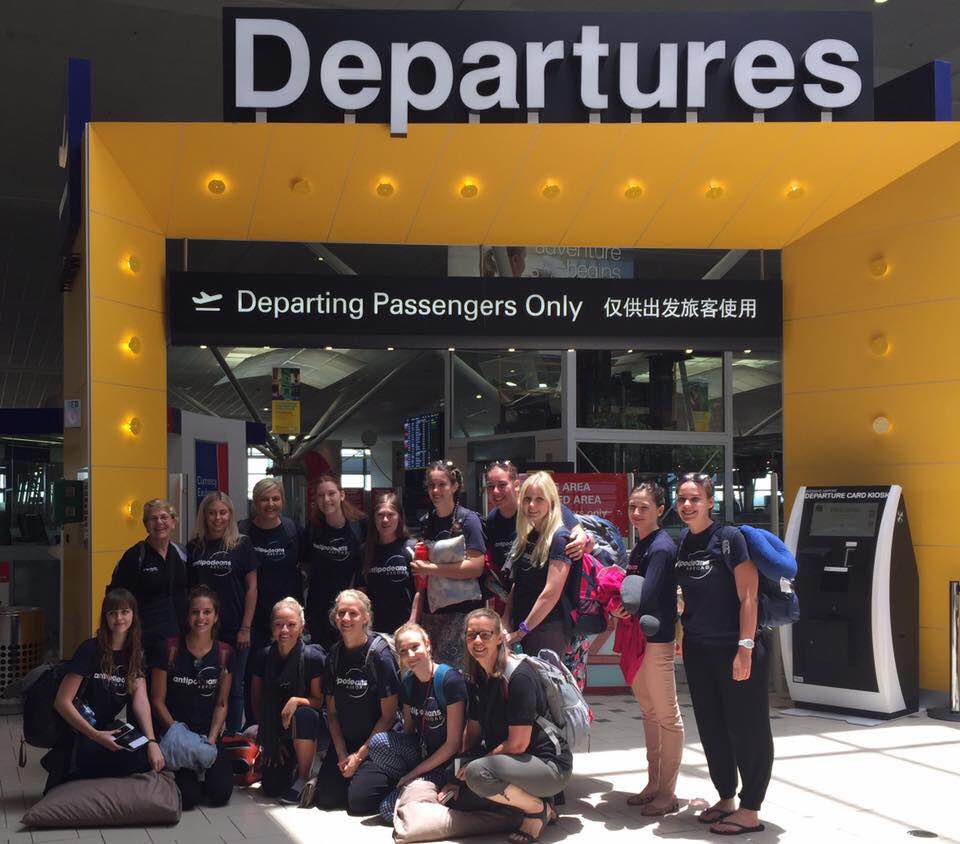
The third of January is here; the moment has finally arrived when we depart for Laos. It could only be described as a mixture of excitement and apprehension, somewhat masked by the hustle and bustle of the airport terminal. The first two days delivers high adventure and Bangkok smells in spades, although the tedium of air travel is not lost on anyone. Flying into Luang Prabang airport we pass a series of mountains with peaks like cloud-ringed fingers; it brings relief not only from the air travel, but the stuffiness of continually recycled air. The airport runs with a smooth third world efficiency, but at a guess most would say better than Bangkok.

Bombarded by strange new sights at every turn is it any wonder we didn't all just fall into bed when the tour around the city was done? However after we arrive and unpack our belongings, like hungry children we dig in for seconds and third helpings of adventure. Night markets! What else can I say? Those who have never been to a developing country and visited the food and goods markets were in for a treat. There was no shortage of vendors peddling wares for all to buy; from WW2 bomblets melted back down and converted into cutlery or figurines, to scarfs and all you could eat buffets for 10,000 Kip ($1.70 AUD), a small charge to test the strength of ones stomach.


One of the many adorable babies getting seen too by SRN's Rachel, Rebecca, and, Claire. Typically our larger group broke off into neat packets and roamed around exploring the sights and sounds, although strangely despite the size of the town and limited means to communicate, most would find the only pizza shop in town.

On the third day we are ready and raring to go. After loading the vehicles we all clamber aboard for the two-hour bottom numbing ride to the first home stay village Na Pho. It seems like the whole village has come to meet us and give the gift of flowers, Saa Bai Dee (Hello) say the little children with the cutest little bow, Kup Jai (thank you) we would reply or something close depending on your First leg all done!

We landed in Bangkok individual grasp of the Lao language. We meet our home stay mothers today, mine is Gyow; she is warm and friendly and shows us to our bed spaces. Not much more than a two inch mattress on the floor with a blanket and a matching one inch thick pillow. After settling in, I migrate outside the small house and try to communicate with Gyow who is tending to dinner. I am met with much smiling but it's clear she speaks no English and my level of Lao is limited to hello and thank you; this could be difficult.

The scenery from our little home stay is nothing short of spectacular to say the least; rice paddy fields backed by an almost shear mountain that rises 1000 meters behind. Each morning it is not until about ten o'clock when the clouds covering its peak are burned off by the sun and it can be seen fully. I must say I was wondering at the quality of the local food we might get and as such packed enough mi goreng noodles from Australia
to tide me over in the event of unpalatable local
fair. later that night, we shared games and dance
competitions with the locals. Jessica was
unanimously crowned Australian stick game
champion after a number of wins against the local
pro team in a heart pounding game that required
speed, dexterity and a excellent grasp of Lao
language.

Day four was the first clinic at Sop Jek! Sop Jek is a
 small village in the Seuang Valley with 73 families. We cut our teeth in remote community health care that day. Many of us were tired by the end of the day but grateful for the experience. We saw people with all manner ailments, and despite the communication issues were able to help many and in the process learn so much ourselves. By then end of the first clinic we are ready for more.

Day five and we set up for the big clinic of this week, run out of the local school; we have the benefit of four rooms to use. I have been delegated team leader and happy to say had a mixed emotional response, but ultimately reconciled with them all and channeled them into determination. Fortunately for me the teamed leaders value is the sum of its parts and I had a fantastic team to back me up. At every turn and with each problem the group innovated and created an efficiency I didn't think possible, kudos to all. By the end of the day we had seen 131 people through our clinic and everyone felt a strong sense of achievement; we were doing it, and we did it well.

Day six and we revisit Sop Jak, this time to provide sexual health education to the high school students. We rotated through several classes and answered anonymous questions from the class, we were surprised by many as it is information we take for granted.

Saturday, 9 January 2016

Final Week for Griffith in Laos – A time to reflect on the trip of a lifetime


COUNTRY: Laos
PROGRAM: UniBreak
PROJECT: Nursing – Griffith University
WRITTEN BY: Laura Maskell

Group A successfully passed another hard-earned weekend. However when Sunday afternoon hit, the group begin to travel back to our new new village, ecstatic to undertake our final week in Ban Na Pho.

When we arrived, we were greeted by our new homestay families and were made to feel as welcomed and comfortable as possible. Strangely we all found it somewhat relaxing to be back in the mountains.

The next day, clinics proceeded as normal. We travelled to multiple villages to share health education and medical assistance. This week colds, reflux and muscle pain were again the biggest issues seen within the villages, however, there were more dental issues than previously.

Earlier in the week the group was presented with a two-month-old baby girl, who was severely underweight and had significant trouble breathing. The group made the immediate decision to send the baby to the Laos Friend hospital for children in Luang Prabang, where she received treatment for malnutrition. A few days later the parents reported back that their baby was gaining weight and was on the road to a full recovery. They also expressed their deepest gratitude for making hospitalisation, living expenses and transportation available.

Upon arriving at one of our village clinics, the group spotted a young boy with cerebral palsy sitting in a dismantled, rotting wheelchair, which was donated four years ago by another Griffith nursing team. The group made the executive decision to buy a new wheelchair, and delivered it later that week. The boy was ecstatic to receive his new chair, and immensely thankful.


Towards the end of the third week, Group A also sent two men with hernias to the Luang Prabang hospital for a removal surgery. The following Monday, before heading to the airport, the group visited the men in the Army hospital. They said we had changed their lives and were very blessed to have had this opportunity.

Within the clinics, Group A alone saw a total of 1260 people, and enabled five individuals to go to the Luang Prabang hospital.

Overall this opportunity has given Group A an outstanding view of primary health care, allowing us to appreciate what we have back home and how we together can make a difference to the Laos people. The clinics have opened our eyes, teaching us that so little can do so much.

The clinics allowed us to experience the Laos culture, however, we all left wishing we could do more as what we could give was limited. The people of Laos were so appreciative and valued our help both in education sessions and clinics. Although the language barrier was difficult, the translators were excellent and our attempts to speak the language were deeply appreciated and sometimes very amusing to the local people.

I believe we have all left this trip with a richer appreciation of what we have, and have filled our hearts with happiness as we look back on the differences we have made.


Wednesday, 23 December 2015

Eye-opening Experiences in Laos (in a good way!)

COUNTRY: Laos
PROGRAM: UniBreak
PROJECT: Nursing – Griffith University
WRITTEN BY: Laura Maskell


After a nice relaxing weekend at Luang Prabang, Group A was ready to conquer week two back in Pak Keng village. Once we arrived in the village we were reunited with our original home stay families.

This week, Group A experienced four eye–opening days of clinic. This allowed us to see multiple medical cases, some of which were culturally unique to Laos and some that are also seen within Australia. As we were approaching winter, the group saw many cases of the flu and bronchitis along with multiple cases of reflux as a result of eating large portions of spicy foods.

This week, Group A also saw a middle-aged schoolteacher who came into the clinic with chest pain and difficultly breathing. Auscultation and assessment revealed consolidation of left lower lobe. Upon discussion the group decided to send the man to Luang Prabang hospital the following Monday. After a few days the man returned home and said that he was feeling much better, and that he was grateful for our service.


Next, a young mother who had a baby boy earlier that week came in. Quickly, doctors discovered that the baby was struggling to feed properly was becoming rapidly malnourished. After a few days of monitoring the group also agreed to send him to the Luang Prabang hospital. They reported that the baby was thiamine deficient, and after an intramuscular injection he was able to feed normally, beginning to make a full recovery.

Overall the clinics were absolutely eye opening allowing the group to understand the unique culture of Laos. This week gave the group a deeper appreciation to how these people live and a better understanding to primary healthcare.

After a long week of clinics the group was excited to do cultural activities within the Pak Keng village such as cooking, weaving and rafting before returning to Luang Prabang for some hard-earned relaxation.

Friday, 18 December 2015

Griffith Nursing Arrives in Breathtaking Pak Keng, Laos


COUNTRY: Laos
PROJECT: Nursing – Griffith University
WRITTEN BY: Laura Maskell

The countdown was over and this year’s first group of Griffith University nursing students were on their way to Laos! We were travelling over 12 hours to conduct primary health care and education to multiple villages along the Seaung River.

Once our group of 13 students and three teachers arrived at the Luang Prabang airport after multiple hours of travel, we were met by our friendly tour guides/translators who drove the group to our first destination My Lao Home via tuk tuk's. Of course being typical tourists we took multiple selfies in the tuk tuk to show family this novel mode of transportation (or, at least it was at them time).

Our group spent the weekend in the main city Luang Prabang, where we were lucky enough to sightsee, relax and embrace the atmosphere and culture of Laos. On Sunday morning our team was whisked away for an hour and a half trip up the mountain to our home stay village Pak Keng. The view was breathtaking: We were surrounded by millions of vibrant tall trees and a gushing river. When we finally reached Pak Keng we were greeted by the village children who were ecstatic to see us and presented with beautiful hand made bouquets of flowers.


After meeting and settling into our home–stays, we encountered our first dilemma. The squat toilets! After expressing concerns and trying to figure out the best way to undertake the deed of toileting, business began. We were taken to the local clinic to sort through our medications, medical supplies, donations and education, in order to deliver primary care over the coming weeks to those who had no, or little, access to healthcare.

On the first two clinic days, the group delivered health promotion education on hand hygiene, teeth brushing and correct lifting technique to each village and an additional sex–ed to the Pak Keng high school. Furthermore, the clinics allowed us to see the common issues faced by countries with lower socio-economic status than Australia. The clinics were an eye opening experience of how so little can help an individual so much, allowing us to feel both compassion and appreciation.

Towards the end of the week, we endured a short trip back in the rain to Luang Prabang where we were reunited with normal toilets and hot water. Over the weekend the group decided to go elephant riding, get massages and explore the traditional Laos food before we began week two.

Friday, 11 December 2015

Nursing in Siem Reap: Mountains, zip-lines and giant buddha statues

COUNTRY: Cambodia
PROGRAM: UniBreak
PROJECT: Nursing - Murdoch University
WRITTEN BY: Melissa Williams and Peter Footer

So here we all are – we have made it to the end of week two of our International Placement. Well done to everyone involved – the very important support crew back home in Australia, our amazing preceptors in Cambodia, our Siem Reap based partners and translators, and most importantly our little team of Aussie nursing students here in Siem Reap.

Sou Sdei and Ter nak sok sa bay te? (hello and how are you?)

Last weekend we took a trip to Phnom Kulen National Park. We set off in our van with our trusty transport driver and translator and began our journey to the top of the mountain. Kulin Mountain is 487 metres high and the summit has only been able to be reached by car since 1999. This is when a private businessman built the current winding road up to the summit. This same businessman now charges US$20 per foreign visitor to use said road – hence I suspect he has well and truly made his money back (plus some) by now. The journey to the top takes at least 2 hours and due to the narrowness of the road, it is only possible to ascend prior to 11am and descend after midday – it seems some logical order does exist in this beautiful country.

Kulen Mountain is situated in the north-eastern corner of the Angkor Complex and is considered to be the most sacred mountain in Cambodia by the Khmer people. It is said that this is where King Jayavaraman II declared himself as god king and announced independence from Java in 802 AD. Even at the top of a mountain of this size and ruggedness there are the remains of 56 Angkorian temples – most in bad condition, however one remains named Hahendrapura. We were a little templed–out by this stage, after our epic day visiting temples on Thursday, so we opted to travel to the summit of the mountain to visit a Buddha Pagoda. It contains an 8-metre long reclining Buddha statue, carved into a sandstone block dating back to the 16th century. In Australia I highly doubt you would be allowed to get anywhere near to such an amazing piece of history, however in this neck of the woods there is a boardwalk built around the statue, and worshipers rub Buddha and leave offerings.


Following this, we travelled a short distance back down the mountain to a river where there are carvings dating back to 12th century AD. It was then that monks carried heavy carving tools up these hills to carve the thousand Lingas and other bas-relief images of Hindu gods and goddesses into the riverbed and surrounding rock face’s. The carvings are known as Lingas and are phallic symbols, and the flow of the river over them sanctifies the water. This sanctified water continues down the Kbal Spean River through Angkor Wat and eventually becomes a tributary feeding into Tonle Sap Lake, Cambodia’s biggest lake.

After this we travelled a little further down the mountain to Kulen Waterfall. What an amazing place to visit, with many Monk, tourist and local doing the same thing on this day. Following a very steep decent down stairs that would hardly qualify in Australia, we reached a beautiful bathing spot where a few of the crew stripped down to their shorts and t-shirts (no bathing suits here sorry) and enjoyed the refreshing fresh flowing sanctified water. Meanwhile myself and another crew member basked and frolicked on the big granite boulders admiring the beautiful scenery and hundreds of butterflies that were sipping on the minerals found in the waterfall.

After the cool off we headed back up the many, many, many stairs where we sat in a quaint little pagoda and were served a fresh home cooked meal. You see, in Cambodia, you blink and then all of a sudden there is a feast fit for a king placed in front of you for you to enjoy.

Following our busy weekend we commenced week two by integrating with some of the local population on the outskirts of Siem Reap as we began working in both Regional Hospital Station 4 and the Bakong Health Clinic. The group was split into two with one group spending the majority of this week at the hospital and the other at the clinic.

At the hospital there were approximately 15 in-patients. Due to the difference in roles and standards between Cambodian and Australian nurses, it is not appropriate for us to administer medication, however following on from the Doctor’s rounds our preceptor wasted no time identifying plenty of opportunities to put our assessment skills to the test on very willing and interested patients. Nursing care in Australia is very different compared to what occurs in this Cambodian hospital, in particular the patients’ family room in with them and take care of all their cooking, cleaning and ADL (activities of daily living) needs.

Due to the rooming in of families, by the end of the week we had a gaggle of gorgeous children following our every move as they became more confident with our presence. As part of our health education aims, we used impromptu opportunities to teach these children hand-washing skills and continued to teach them basic English words. We also gave them some balls to play with and taught them to catch (with their eyes open) and we even showed them how to play a new game – Tunnelball. Highlights at the hospital included a neurologically deteriorating patient whom through our fundraising efforts could be sent to a private clinic to receive a much need diagnostic CT scan, as well as an emergency admission who had been hit by a car. We also completed assessments on patients with heart valve deficiency, pneumonia, alcohol withdrawal, abdominal illness and diabetes.

Meanwhile, Peter one of the members in the group working at the clinic had this to say about his teams’ week…Working in the clinic has been a great experience full of opportunities to experience cultural exchange from both sides. With fewer resources in comparison to Australia, extremely competent nurses run the medical team. The clinic operates similarly to both an Australian General Practice and an Emergency Department, with one ambulance to transfer patients if an emergency occurs. The clinic offers a great opportunity to demonstrate nursing assessments to other staff as well as primary health care such as dental and hand hygiene. Highlights include experiencing a newborn assessment, the diagnoses and treatment of Tuberculosis and teaching children how to brush teeth.

Everyday we are taken on a much-needed rest for lunch and an afternoon siesta. This two hour break is commonplace in Cambodia (needed to deal with the stifling humidity) and most of the clinic staff use this time to go home and cook themselves lunch. After lunch the clinic spends most of its time preparing for the next day, and with very few patients attending in the afternoons, we generally use this time as an opportunity to present case studies and assessments to each other as way to continue our education.

During our down time, Siem Reap offers many things to do – from temples to pubs. One personal highlight for me this week was flying 50 meters high in the air with the zip–line company Flight of the Gibbons. Although rather expensive at US$120 – and we did not actually see a gibbon – the experience was exhilarating, offering a break from the organised chaos of traffic and markets that is in the city area.

So that sees the end of week two and it is hard to believe that this time next week our job here will be done and we will be reunited with our beautiful families and friends. So, until then…

Le Hi and Ah Kun Chrian (goodbye, and thank you very much).