Showing posts with label Borneo. Show all posts
Friday, 21 November 2014
Reminiscing a life-changing trip and some advice to future travellers
COUNTRY: Borneo & Cambodia
PROGRAM: GapBreak
PROJECT: Building & Teaching
WRITTEN BY: Clare O'Brien
I literally feel like I've left my family behind. It's been two days since I left Borneo and all I want is for those people to be back in my life. We were the motliest crew ever but we worked.
The last few weeks went by so fast. Our three months of non-stop cementing has also caught up to us and we caught ourselves several times almost falling asleep at work. But all we had to do was remind ourselves of the massive difference this makes to the lives of these children, and we were motivated to keep going. We dug and lifted, carrying massive buckets of heavy soil through the school to build the floor of a shelter for the kids.
Just when we thought we couldn't lift anything more, couldn't smash another rock or mix another pile of cement it was suddenly our second last day of project work, and I'll be damned if we didn't finish on a high, despite the sweltering heat.
We had some of the best fun chilling in the long house making the spare room our home, turning the spare mattresses into a jumping puke and making the camp our playground. The last night though was honestly one of the best. We decided to have a night time game of hide and seak sprinting around camp. When we got too tired to play we all pretty much fell asleep next to each other before we eventually headed to bed.
As we trundled off back to Siem Reap, I couldn't help but reminisce. I know it's corny as hell- but I did it. Sitting in the back of the bus looking at how different our surroundings were to when they first started. I honestly can't even begin to sum up my personal highlights of this incredible journey, but I do know that they all involved the fantastically sassy Zoe, the energetic and gorgeous Brea and the ever-chilled and majestic Stevie.
I am now sitting in a backpackers lodge in Vietnam and I honestly feel like my life has been changed. I would recommend this experience to anyone. If you need a break from normal life, if you want to make a difference somewhere else in the world, whatever the reason- this is definitely something everyone should experience.
As a teenager leaving high school with no real drive or destination, I did feel a bit lost. Now, after finishing three months in an impoverished country I feel like I've gained more than I thought I could. This trip helped to solidify my values and opened my eyes to the world. My trip to volunteer in Borneo and Cambodia with Antipodeans Abroad has been the best decision of my life.
To those that do decide to embark on an expedition such as this, I have this advice: enjoy every moment, don't worry about missing people at home because they'll always be there. This may be your only chance to meet these people, to build a kindergarten for a village, be taught a different language by kids, and travel with people that will soon become like family. I now have so many friends around the world that I can't wait to get back out and see them all.
If there's one thing I know for sure, it's that my lifetime of travelling has only just begun.
Clare O'Brien
Friday, 17 October 2014
Rain won't stop the fun in Borneo
COUNTRY: Borneo & Cambodia
PROGRAM: GapBreak
PROJECT: Building & Teaching
WRITTEN BY: Clare O'Brien
If the last month was a gym work out it would be leg day.
The four remaining members of our Borneo group headed to Bongkud, the camp situated right next to Mt. Kinabalu. This was a major change in landscape from jungle to pretty much rolling green hills. When we arrived at camp we were greeted by Eve, our new camp manager, who told us, "Just think of me as you're older sister. I would say mother but that makes me feel too old." Despite this, she did in fact become our mother. She was always looking after us making sure we were well fed and having fun. Not only that but she would join us every dinner time and just sit with us. Chatting to her and listening to her stories made time fly by.
The reason I called this month leg day is because we had to prepare for our Mt K climb. The camp is situated right next to Bongkud hill, a hill that if you climb 8 times is the equivalent to climbing Mt K. We could not resist a hill like that and we were determined to climb it at least twice before our climb. Not only did we climb it, but when the new gappers for this month joined, they climbed it with us. They did this even though they weren't going to be climbing Mt K- that's impressive!
However, we did made one mistake. Our second time climbing was a project day. This made the day SO much more intense. The project work that we were involved in was cement mixing, and a lot of it. Even though it felt easier than Tinangol we defiantly mixed more cement. We were helping to set the foundations for a new kindergarten the community was building.
On the second week, in the afternoons two people would go back to camp and teach some of the community kids. Now this was amazing. The kids were different ages ranging from 6-12 so we had to somehow cater for them all. It wasn't a problem though the older kids acted like the translators and helped out in any way they could. Right at the end, however, we completely broke the language barrier. We played Frozen songs. Everyone was singing in perfect English- it was fantastic.
Soon enough we were set to climb the mountain. There was one problem Eve had given two of us a case of conjunctivitis and I had twisted my ankle. We were determined to not let it stop us though, and we powered right up that mountain.
I can't even describe the experience. I wish I could upload photos because honestly it was amazing, turning around and realising you were in the clouds, climbing at 2am to reach the summit and turning back to see a stream of head torches it was just an incredible experience.
Even though all this sounds like it was happening in fantastic weather this month brought rain so much so that it started raining inside our long house!
Anyway, the night before we left there was a bonfire, speeches, songs and even us singing and dancing. It was incredible and I never wanted to leave Eve, but Mantanani was our next stop.
This beautiful island was sadly only beautiful for us for two days, then it rained, every single day. And I don't mean light rain, this is the crazy thunder and lightning storms we get back home. The thunder was so loud it had the chief cowering in our dinning room. You couldn't dampen Aida's enthusiasm though. Every chance we got we were out doing project work and then having to sprint back to camp when it started raining.
We did get to finish the toilet blocks but due to the amount of rain on our last few days the pipes burst and sadly destroyed a lot of the hard work we had put in.
Whenever the weather was calm though we were either in the sea, playing volleyball or touring round the island with Aida. I even got a private sunrise walk (mainly because no one else wanted to get up at 5 in the morning). It was beautiful, we walked our way out to the tip of the island and even though it was cloudy the sky still turned some amazing colours.
I think the most fun I had on that island was the last two days, well three considering we got stuck on the island an extra day. There was a bit of unrest on the island so four of our nine decided to leave the island two days early, but that's when the fun began. We got cooking lessons with Aida and walked over to the other side of the island where we saved some birds and saw some awesome starfish. Not only that but we were smashed in scrabble by the chief and Aida, people who speak English as a second language! It seemed like the others just left at the wrong time. Our supposed last night was fantastic, we had this massive BBQ, but because it was raining we had it out of a wheelbarrow inside our eating area. We then chilled with Aida, played cards and just had a great night.
We woke up to weather that ensured we'd be stuck on the island for one more day. We then had a roller-coaster boat ride out the next day. And our two months in Borneo were up, just like that.
Time has absolutely flown by, the places have been fantastic, however it's the people that have made the biggest impact on me. Eve and Aida have inspired me. Eve's story of having to build her camp in a month, have the most stressful time of her life and not giving up, to work through that and come into the most amazing job of her life. And Aida who when I made the comment "there's just so many different things I want to do" replied "why can't you." and then had the most amazing stories to tell.
It's sad leaving them all behind but we're onto the next leg of our adventure now. Four of us are heading off into Cambodia, for what I'm sure will continue to be a fantastic journey!
Friday, 3 October 2014
Expeditioners set foot in Borneo
COUNTRY: Borneo
PROGRAM: Expeditions
PROJECT: Teaching & Environmental Conservation
WRITTEN BY: Borneo Expeditions Volunteers
Coming to Borneo, I had absolutely no idea what to expect. At first I had no interest in coming here but honestly, I'm so glad I did. The culture, the people, the atmosphere, is all so amazing. The camp staff are beautiful no matter where you go and the locals are just as nice, despite the language barrier.
Our first stop was Tinangol, the best place to go for our large group of 10. We had no clue who anyone was but we were going to be living together in a traditional long house. It became our home and the place we bonded. It wasn't just the close living quarters that brought us together as a group but the whole camp. The camp leader, Kenny, was enthusiastic about everything and just the nicest guy we could ask for. Because of this we felt we needed to step up our game and work incredibly hard.
The project site was a 45min walk from where we were living so we were exhausted before we even started any work, but we took it as a warm up. After a 10 minute rest we would be up ready to smash out either the kindergarten, nailing and cutting bamboo or to mix hefty wheelbarrows of cement and level out soil. We wanted to do something for this community, and we did just that. Not only did we use all the cement the camp had but we did far more than Kenny had planned. It felt fantastic to really see that as a team we could do something.
As part of our project we also were able to teach the kids we were making the kindergarten for. Now this was an experience. The kids were the loudest bunch I have ever met but when you sit them down and find something they love doing they'll do it for hours. We first went in for only 45 minutes and had them running around hanging off us and giving them piggy back rides, so we ended up leaving there sweatier than when we left project work! After that we were all a bit scared to head back and teach but when we did, they loved it. We read the books, drew them pictures and even taught them a few animals- it was such an incredible experience. After meeting them it made walking around in the community so much more fun as we would laugh and greet them every morning, 'Salamat Pagi!'
The last morning in Tinangol was emotional; we had formed a bond with each other in that place and also with Kenny so we really didn't want to leave. However, Kenny's last words inspired us to keep adventuring: "Follow you're dreams guys and just enjoy!"
After Tinangol we headed to the most confronting experience so far, the homestay. This is where our really close friendships helped us a lot. Hellie- the girl I was staying with- and I did not have the best first impression. We were tired and all we wanted was to feel welcome and sit down with the family. Obviously this would be hard at anytime due to the language barrier, but we were also exhausted from our 8 hour trip to Bath Petuh, however we found it extremely difficult as we were thrown right into the deep end and sent to a ceremony with the youngest daughter of the house (Sophia, 10) in traditional dress. It was quite intimidating walking into a house with over 100 people in it, all of them staring at us. Not only that but we were unable to communicate with them. Unfortunately we ended up leaving early from this ceremony but we were able to attend a second one before our time was up.
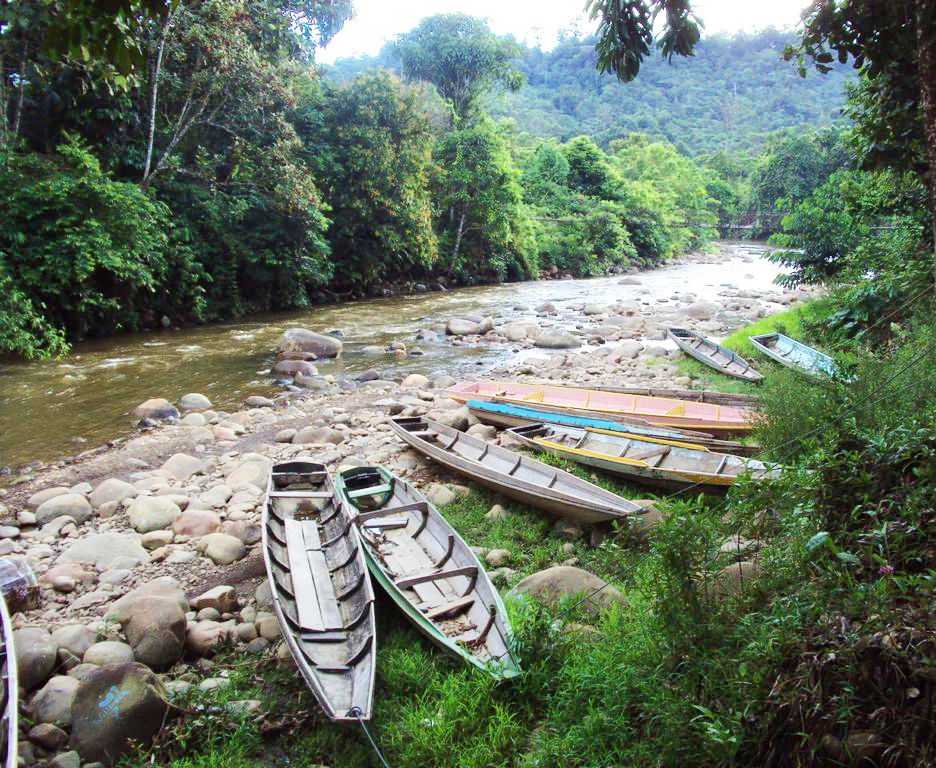
The work at Bateh Puteh was extremely laid back compared to the cement mixing and gravel laying of Tinangol, however it was still really enjoyable. We travelled on an amazing river on the way to the eco camp, we saw all kinds of monkeys, birds and even crocodiles! This camp was all about bringing back the rainforest from the devastation of palm oil plantations. Not only were we working in the jungle but we had a night sleeping in hammocks there too. This was one of my favourite days so far. After setting up the hammocks we were allowed to roam freely around the jungle. This was amazing, we were following elephant footprints and butterflies it was amazing. The only blemish in the trip was when a group of three had to be hunted down after getting a little lost in the jungle. The guides kept a very close eye on us during the night walks, where one group saw the second slow lorris of the trip and my group saw many gorgeous paradise birds.
The second ceremony of this stay was much more enjoyable, but very culturally shocking. All 10 of the group were invited to this, however the boys sat in a separate room to the girls. The men then proceeded to pray for half an hour, while the woman sat in the back room, with all the food in front of us. However as this was a Muslim community the men had to be served first, not only that but they ended up eating all of the rice so the women had to wait longer for food. This was extremely shocking for us as our culture is completely different and a lot of the girls in the group struggled to understand and were getting quite frustrated. Just to elaborate- we got to this ceremony at 6:00pm and ate at 9:30pm!
Our stay ended on a positive note, however, as we all dressed up in traditional clothing again on the last night to watch the locals sing and dance, joining in ourselved at the end. Leaving Bateh Puteh was hard for us as we knew it would be the last bus journey for 6 of them. As a group of 10 we had become a family, we had the worriers, the foolish brothers, the responsible sisters and the immature kids, when they all left it was the first time I felt homesick. At first it was hard to imagine the trip continuing without them, but continue it did. And for an update, well… you're going to have to wait for the next blog!
Labels:
Borneo,
Conversation,
Expeditions,
Teaching,
volunteer
Wednesday, 1 May 2013
Final word from the remote Borneo crew
COUNTRY: Borneo
PROGRAM: UniBreak
PROJECT: Teaching & Environmental Conservation
WRITTEN BY: Richie Allchurch
We headed off next morning, saying farewell to our nice host family of Paul and his wife and two of their children. We headed off on another boat ride adventure and it was just as nice as all the rest, winding along with the river through the thick of the jungle. On the way to Long Laman on the utes we got some good views of Maunten Murut and Batu Siman, three big limestone humps sticking out of the jungle, in a pre-historic like manner, gleaming in their magnificence, waiting for us. Long Laman was a pretty looking village with a big field in the middle and the villagers welcomed us kindly into the community hall where we had afternoon tea of rice and meat and greens. We chilled there for a while until informed our boats were ready. We set off once more to Long Ajeng by boat although we had to get out and walk the rest of the way as the river was too low to go any further.
We ventured off the river for a shortcut and came across a friendly old Penan man who gave us rambutans and said ‘good day’ basically. It was a simple gesture but it was lovely to think that you are surrounded by hospitable people that are willing to help you out whenever. We were very fortunate to be spending time with the Penan, learning from them and thus viewing the jungle from an enlightened viewpoint. We eventually made it to Long Ajeng, not the prettiest of the Penan villages with houses close together, few trees and plenty of noisy dogs and roosters. The house that we stayed in was very old but we didn’t care too much; we were well fed by ‘old mate’ as Gus would say that spoke no English but smiled and nodded and helped us where possible in setting up our mosquito nets. I felt pretty drained that night, just the amount of travelling and the enormity of what we were going through was starting to get to me. We had a bit of a debrief about the trek we were starting the next morning to Batu Siman which looked incredible from the road and was Hollie’s favourite place in Borneo so, despite my exhaustion, I was looking forward to it immensely.
The next morning signalled the beginning of the incredible trek to Batu Siman! The first part of the trek was perhaps the hardest, about 30 -45 minutes up this steep, muddy slope that really got the heart pounding, forcing us to stop every 5 minutes. Some of us found this a bit much but good old Hollie was on hand to push us further into the jungle. We were able to view Batu Siman from a gap through the trees which looked more breathtaking than ever and made me feel pretty blessed to be going to a special, wild place such as this. We made it to the base of one of the formations and took shelter under the amazing limestone stalactites’ that hung down from the ceiling. We saw some hornbills fly over majestically with graceful wing beats reminding me that we really were out in the wilderness. The Penan kindly set up our camp in the rain next to a pretty river where we bathed in the shallows in almost pitch black before going to bed. Listening to the sounds of the jungle was incredible with the combination of rain, bird and insect calls, rain drops and our chatter creating a peaceful combination to lie back in our hammocks and drift asleep to.
Walking through the jungle in the morning to Batu Siman, was a stunning experience, with the air very fresh and the moisture from the condensation making the tall, green trees look healthy and grand. We heard some interesting calls from the jungle creatures including a red hornbill, a peacock, a gibbon and a rhinoceros hornbill which made a cool ‘brrrrrrrr’ sound. We reached the base of the centre of Batu Siman, and climbed up a tricky bit to where we would have lunch in a big cavern underneath the rock that stretched to the other side of it. The view of the jungle from the other side of the cavern was simply magnificent; the land was virtually entirely intact with undulating hills and valleys of jungle and mountain ranges in the background. The trees were abundant and very diverse in their sizes, shapes and colours, visible as far as the eye could see. The calm serenity of the place was astonishing with Indonesia apparently visible in the distance. I made out some hornbills and an eagle fly over which really depicted the true remoteness of the area we were in. We ventured round and into another smaller cave that was dark and the floor covered with bat poo – guano that we smeared on the cave wall, writing our names and the date that we were there.
I saw some more hornbills land in some trees when we descended down from the rock and one soar over which literally sounded like a glider plane whizzing by; amazing! We walked between the gap between two of the formations and that little patch of trekking was pretty magical with some amazing, wide girthed and buttressed trees and helicopter and Aywah-like seeds falling from the trees making us feel like we had found Avatar on planet Earth. We trekked onwards for a long time, getting down to the river and seeing the skin of a black and gold striped snake that we would be eating later that night. We got back to camp in the fading light, utterly exhausted but pleased with ourselves and the unreal day we had just had. I slept the final night in the jungle hut the Penan had crafted which was not very comfortable but quite an exhilarating experience opening your eyes to the beautiful jungle.
It was to be our last day out in the jungle the following morning which was sad but also satisfying knowing that we had been out into the wild, able to live in the jungle, in a unique area that only a dozen white people had previously visited. It was Caitlin’s 20th birthday this day so we all decided to do something special and that was collecting the helicopter seeds that were littered over the jungle floor and then throwing them up in the air when she walked by, looking like confetti. She was pretty chuffed with this, albeit a little emotional but I knew she was happy. We left base and trekked uphill for a bit, with the sun gleaming through the glistening jungle illuminating the rising mist and the moisture droplets on the trees that really was a sight to behold. It was nice to be back in civilisation and enjoy the creature comforts that came with it; a flat floor, a proper roof and easier access to the toilet but I knew I would miss the jungle and that humbling joy of being out there in nature’s wonderland which I knew some of the Penan, particularly the older ones, would love to be amongst too.
Saying goodbye to the jungle and the villages
Getting up the next morning in Long Laman was the last night time we would be waking up in the jungle. This was pretty sad to me as I had grown attached to it, almost a part of the enchanting landscape and beautiful people that resided there but the day had to come. Coupled with feeling exhausted and aware of all the pent-up emotions I had harboured over the previous 3-4 weeks, I couldn’t help but let out a bit of emotion, under the cover of my sleeping bag. It was the first time I had cried out there in the jungle but I thought it was an expression of how much I loved the place and how I appreciated everything I experienced out there. I looked out at Batu Siman one final time at the bus-stop, mystical and majestic partially shrouded in cloud and I thought what a spectacular place that was and in awe that we had actually been there. I was emotional again at the airport, the most I’d been for quite some time but when we took off and flew over inland Sarawak I knew it was not going to be the last time I would visit this beautiful area, but the first of many. I thought of what I could do personally to reverse the tide of palm-oil and logging in Sarawak and replace it with reforestation, sustainable initiatives and local development projects.
Final words of encouragement
For anyone that wishes to go to Borneo; do! It is an amazingly unique and different place with beautiful sights, sounds, smells, tastes, touches and people that is a very simple yet rewarding way of life. The local issues will captivate you especially when you lay eyes upon the majesty of the jungle and the kind, caring people of the Penan. It is a wonderfully diverse environment and culture that is waiting for you to come and fall in love with it.
Monday, 22 April 2013
Sport in the classroom, and a sad departure from Long Sait village
COUNTRY: Borneo
PROGRAM: UniBreak
PROJECT: Teaching & Environmental Conservation
WRITTEN BY: Richie Allchurch
Week 2 in Long Sait - Teaching
Over the following week, I focussed more on sport after the whole-school class doing gymnastics with Sumi and the kids on the grass such as headstands, handstands and cartwheels and participating in games like wheel barrow and piggy back races. We received assistance from Zadi and Steve, an English couple who had come to Borneo for 3 months looking to help out in the school, with the tree planting project and to trek with us. In the whole-school classes we persisted with music, arts and crafts and dancing, trying to get the kids to learn some moves such as Gangnam style, tap some beats and sing songs like ‘In the jungle the mighty jungle’ with varying success. But the main thing was we had fun as did the children, with lots of laughter and giggling. One day we had a paper plane competition that Gus organised, teaching the children how to make a generic plane out of paper to see which could fly the furthest. This was great and quite successful with the furthest 3 planes flying a long way – not bad for an inaugural competition.
One afternoon we came back from teaching in the hall to find sketched masterpieces of ourselves drawn by Grace and Linda. Gus and Sumi were on the same page; Gus pumping some weights but also thinking deeply with his colloquial sayings such as ‘Hey hey’ and Sumi on the pole with a bit of gastro. I looked like a mad scientist, taking photos but also completely unaware of the time perhaps because my thong had broken which earned me the name dark horse/stallion always creeping up from behind, later than expected, dealing with the jungle nymph. Caitlin was the top gun air force pilot. Catherine had a pineapple phobia. And Kaitlyn was the gecko, leaping up to catch the frisbee with her fingers widely stretched apart.
We kept up our regular nightly gatherings at the house of truth and dare where some interesting honesties were told and some wacko dares played out. We also talked more about ourselves and our own lives like I recall Hollie telling us that she was on Shipwrecked which she later regretted and also getting serious about what we could actually do to help the jungle and its inhabitants in Borneo. To start, we can look at phasing out our use of cosmetics that have Palm Oil in. Reducing demand is perhaps one of the most effective ways to stop the supply of something that is damaging the environment; shrinking the market that will not be supplied to if it is not there. This is only really scratching the surface though. It will take a huge concerted effort, more constructive labelling of products and an awareness campaign to shift habits away from palm oil consumption.
On our second last night in Long Sait, there was a special celebration held for us in the village hall where most of the inhabitants came down to watch or participate. It was a cultural show where many of the young and old in the village walked into the centre of the room and danced and sang for us, in traditional attire to the same tape recording of Penan music. Each dance told a story; there was one danced by a lady in a black and gold embroidered dress and headband that portrayed rice harvesting and there was another of an old elder out hunting in the jungle with his Parang, surprising us at times with sudden hunting cries. Then it was our turn to get up and show off our impersonations of the dances wearing the headband (for girls) and the feather headdress (for guys).
All the takes were very funny for the locals with a few of the girls and Hollie depicting bathing in the river, harvesting or taking items off shelves while Gus chose to go surfing which was hilarious. My mixture of Penan and contemporary dance such as Gangnam style got a few laughs also. It was an entertaining night and a way for the Penan to express their gratitude to us for visiting their village.
The following day was our last in Long Sait, presenting an opportunity to celebrate our time there. So we chose to have an Australian day theme to introduce them to aspects of our culture. In the morning we gave out kangaroo-shaped stickers to the children to colour in and stick on their shirts to get a photo of. In the afternoon we gave out Australian stickers, more sports equipment and had heaps of fun giving the kids Australian tattoos which they thought were pretty ace and colouring them up with green and gold zinc, getting into the true style of Australia Day. We said our final goodbyes to the kids and thanked them which makes me sad looking back, remembering how delightful and cute they were but we had a fantastic time with them. We had one final, long bathe in the Long Sait river, in our special spot slightly upstream and then I chilled out on a rock for a while reflecting on the amazing time I had had out in the village.
That night, Gus and I along with Grace, Caitlin and Hollie went next door to Norrin’s house to teach English one final time. I taught a couple of sweet Penan teenage girls, who both read and wrote reasonable English but they needed to practise their conversations so they could talk to other people effectively in English which will improve their prospects of working and living in the English speaking world. They both said that English was their favourite subject and were both sitting exams to get into the higher levels of secondary school. I sincerely hope they get in and can further their English skills as they had a huge desire and passion for learning the language. The girls, the Penan youngsters and the older teenage boys/young men who walk around during the day doing very little, deserve a decent education so that they can become who they want to be and fulfil their purpose in life which I know they can achieve because of the great enjoyment they get out of learning.
Goodbye Long Sait, back to Long Kerong - Recuperation

The following day it was actually Australia Day but it was a sad morning for us as we had to say goodbye to Long Sait. We thanked our host family very much – I attempted to in Penan, bought some more wrist and calf bangles and they gave us some colourful Christian themed beaded necklaces as gifts which was very nice. We said goodbye to the villages and were off, some of us a bit teary, but we had to go. Going over the swing bridge, I looked back at the lovely village of Long Sait, the river and the people that I had developed fond impressions of one last time and then we were away.
The trek back to Long Kerong was a quiet, sombre affair with most of us a bit down at leaving Long Sait but it was also nice to have some peace and contemplate what had happened there. No one floated down the river with their pack on this time (Grace) as we were much more used to trekking by this stage. We stopped midway to eat a nice tasting red fruit from the side of the path; it was awesome how beautiful food was literally provided fresh at our fingertips. We made it to Long Kerong and spent the afternoon relaxing, bathing in the river and washing our clothes.
Before we headed off to Long Sepigen, Gus and I visited church, the first time we had done so. It was interesting to begin with, noticing how it was similar to a Western church service, which they would have been taught, with a band, a sermon, some bible readings and a prayer but was slightly different in that the men and women were separated on either sides, like in Islam, and that the bulk of the village went to church; it was a real community affair unlike most suburbs in Sydney where only a minority go to church.
The Penan wanted to be there but I felt as though there was something lacking in the service, the normal sort of positive energy and meaningful vibe out of the preaching in an inspirational church service wasn’t there. It was as though the Penan were obliged to go but weren’t getting a whole lot out of this. The Penan are a very modest and humble race of people so perhaps they are always like that in church. That being said, I couldn’t help think that keeping some of their former Animist beliefs or traditions and integrating them with Christianity could make for a more lively and passionate affair, respecting their past and also embracing their new beliefs.
Monday, 15 April 2013
2nd installment from remote Borneo crew
COUNTRY: Borneo & Cambodia
PROGRAM: UniBreak
PROJECT: Teaching & Environmental Conservation
WRITTEN BY: Richie Allchurch
Long Sait - Teaching
We arrived in Long Sait in the pouring rain, crossing a rickety swing bridge which was pretty scary but I still managed to take some photos of the river much to everyone’s annoyance behind me. Long Sait did not have as many trees or green areas as Long Kerong and was more built up with more houses in closer proximity to each other. We were introduced to our host families, ours a nice family named Danyu (the father) and Ben (the mother) with a daughter called Surya Hannah. I was uncomfortable with the circumstances at first because our family didn’t speak the best English but all this worked out as Danyu taught us lots of Penan words and phrases with a dictionary at hand as well as his niece, a lovely lady named Norrin who was very interested in learning more English and introducing her children and relatives to it, and who spoke the best English out of anyone in the village. We had plenty of rice, greens, coffee, milo and chocolate wafers and after a while ate some two-minute noodles or mi goreng and some exotic meats like wild boar, deer, iguana and river fish.
They had a couple of interesting pets too; a baby wild boar, a turtle and a dog named ‘boa-boa-boa’.
On our first Monday in the villages we started teaching. It was a three-minute stroll up the path to the primary school which was very beautiful, with views out to the hills, nicely planted with flowers and bushes with a sports field over to our right. Catherine and I were assigned Year 3, who were very curious to see tall, funny looking white people in their classrooms. We didn’t really know where to start since we didn’t know what they had learnt in English and we barely knew the Malay or Penan languages. So we started off each lesson with a game, passing a big ball around and getting the kids to say ‘My name is ________, what is your name?’
We would often also sing ‘heads, shoulders, knees and toes’, to get them used to body parts. Catherine and I originally taught using rote learning and would draw a person on the board, numbers, shapes or animals or act it out and get the children to recite it after us or write it down. We realised that we had to be creative to instil in the children what we were teaching them. Bingo was one of the most effective measures, giving them a piece of paper with shapes, colours or numbers so they could recognise what we said and cross it off.
In the afternoons we held a class with the whole school of 52 pupils, teaching them songs such as the Hockey Pokey and the Wiggle Song as well as games to get them excited and active such as heads down thumbs up and the alphabet game where they would get split into two teams and someone would shout out the letters, with the corresponding kid having to run to the middle and first person from each team to do that would get a point for their team, causing great celebrations when they won. We focussed on extending what the kids had learnt in class in the morning to afternoon activities, getting them to draw pictures of their homes, the villages and the school as well as writing the names of the objects in English so they would learn the names of the coloured pencils they were using. After the afternoon class, I and some of the others in the group helped out teaching the children sports such as soccer and ones that they had never seen before such as cricket, frisbee and skipping. This was great fun for me as I love sport and for the kids to have a run around with toys that they hadn’t used before and quite satisfying watching them laughing and picking up new things.
The group was gelling together well by the first week of teaching. It was all going fairly smoothly apart from the day when everyone was a bit sick which was inevitable from living in close proximity to one another and being introduced to a new environment and the lower hygiene and food preparation standards that came with it – hand sanitiser is a must for these situations. We came to know each really well through night chats and discussions at the nice, open home where Linda, Sumi and Catherine were staying, talking about each other’s lives, experiences and views and sometimes through some good old-fashioned games. We were happy out there in each other’s company, bathing peacefully together, getting used to the local culture and walking to school to teach with everyone to delightful children.
First jungle trek!
At the end of the week, it was time for our first trek! We were a bit slow to get going but we were off by mid-morning walking down to the river where we were ferried across for 30 seconds with a hot Penan man apparently controlling one of the boats. We climbed steadily for a while taking it slow on the steep, slippery, muddy slopes from the large amount of rain we had had the past few days. Some of the girls found it hard going but we stopped and had regular breaks, enjoying the views out to the hills beyond and the peace and quiet away from the rooster crows and dog barks of the village. Before long we were in primary jungle, where it was noticeably cooler thanks to a taller and denser canopy. We passed a rice paddy in the middle of the jungle that been cleared for a family in Long Sait on this slope. This they would harvest for a few seasons before letting it grow back into jungle, a sustainable form of agriculture. We trekked further on, admiring the tall trees above us and taking photos of ourselves all sweaty and smelly but pretty happy.
We made base camp around midday in this little clearing that was named ‘flower garden’ due to the large amount of pitcher plants surrounding the camp on the ground or suspended off trees with a mottled red and yellow/green colour. We made camp with the Penan helping to string up our hammocks between appropriately sized trees. I had to be especially careful with the hammock I was using as it was Hollie’s :S We went down to the little, tea tree coloured river to have a true bathe in the cool, dark water which was a little scary but refreshing and comfortable thanks to the soft, bottom. It was pretty cool laying there in the water, looking up at the jungle canopy, taking in the beauty of the place. We held court after dark where we reported back to the judge, in this case Gus, occurrences of the day such as best stack – Grace and/or Catherine and best trekker – Caitlin. We went to bed soon after, pretty tired but relaxed. I lay there in bed, listening to the random and somewhat hysterical conversations of Grace and Catherine which were pretty funny and tried to rest and fall asleep, absorbing the surrounds and letting the forest become a part of me.
I emerged from the hammock after an interesting night’s sleep that was stop start with very vivid dreams due to being out in the jungle. I took some sneaky photos of everyone over breakfast, highlighting their emotions at that point. Some were tired but happy like Gus, Caitlin and Grace, some contemplative and forlorn like Cat and Kaitlyn, and Sumi just plain shocked. We headed off late morning into the jungle, trekking through lovely old-growth jungle that was dense and beautiful. We started trekking downwards on a slope with great views of the trees reaching high above on our left and right. Unfortunately we then had to walk up a slippery hill with some of us needing a helping hand over logs and around trees. Once we got to the top, we had one final long and sometimes steep descent down to the river which was tricky and overwhelming for some. We slowly got there although the Penan made a mockery of us, leaping down going 10 times quicker than us with twice the load on their backs but they were used to it, these men of the jungle. We finally made it back to flat ground but had to wade through the river before we were back in Long Sait.
Thursday, 11 April 2013
UniBreak return from remote Borneo


COUNTRY: Borneo & Cambodia
PROGRAM: UniBreak
PROJECT: Teaching & Environmental Conservation
WRITTEN BY: Richie Allchurch
Our adventurous UniBreak students have recently returned from their 4-week placement in remote Borneo. Due to no internet access, they were unable to blog on the go, so we are now sharing their stories post-placement.
Orientation
Touching down in Borneo was a pretty surreal and exciting experience for the Antipodeans crew of Richie (yours truly), Gus, Sumi, Linda, Catherine, Caitlin, Kaitlyn and Grace. Flying over the mountainous jungle that was wild and dense but noticing the logged areas with smoke still rising from them and fresh palm oil plantations was an amazing yet sad sight. The coastline looked beautiful and the local houses very different and basic so it really did feel as though we were entering into another world. Miri airport felt very rural as we could see out into the jungle but also very holiday-like and dreamy since it was small and we were all extremely tired from a 15 hour transit from Australia, for Catherine it was at least 20 hours by herself at KL airport :l
We met Linda from Melbourne wearing the Antips shirt at the airport and Tom, one of the in-country partners, uber-relaxed in his Hawaiian shirt, shorts, thongs and sunnies and we headed by bus to our accommodation. Miri seemed like a fairly simple coastal town with a noticeable difference between the rather wealthy in their palace-like homes – chiefs of logging companies we were informed and the ordinary folk in wooden shanty-like houses. It was quite a developed place but not quite as good as Australia with older, simpler looking buildings, no gutters on the roadsides to drain away water or sewerage, lots of rubbish around and generally not as flash as Sydney. We got to Treetops Lodge, a nice eco retreat in a semi-rural area around a lake which our rooms were above. We settled in, getting used to the mosquito nets, the outdoor toilets and showers, the spiders in Grace’s case – a large one appeared in her bag that we were all notified of through her screams and the geckos squeaking in the roof.

We had a run-down with Tom about some of the local history in regards to the logging and governance issues with the Penan, what we needed to expect in Borneo generally and out in the villages and what we needed to take out there to survive comfortably. Going into town was interesting to see what the local Malay looked like – short, relatively dark and usually slight of build and they were certainly interested in this little group of white people, especially the blonde girls. We stocked up on some necessary clothes and food and had a good dinner at Ming Café. An early night was in order as we were all exhausted from the previous days’ travel exploits.
The next day we had a bit of an excursion out to Niah National Park getting our first taste of the jungle up close which was lovely with its interesting millepedes and caterpillars, tall, radiant trees and lush greenery. After an hour or so walk we arrived at the Niah Cave, a vast cavern that reminded me of the Goblin realm in the Mines of Moria with Gollum’s Cave barely visible down below. You could imagine him trying to out-riddle Bilbo at the bottom. On the bus we got a good taste of the extensiveness of the Palm Oil plantations in Borneo which even in and around Miri was very large. It is a cash crop, generating huge amounts of money due the strong demand in a huge and diverse array of products from chocolate bars, to two minute noodles to cosmetic items but is very detrimental to the environment as it not only replaces rainforest that acts as a carbon neutraliser but it renders the soil useless once harvested two or three times with a lifespan of only 15 years as it changes the pH of the soil so that it can’t support future plant life.
We headed back to Treetops after getting some more supplies at a local market, some Pierre Cardin socks for me – rather fancy, and did all our final packing for the plane ride in the morning. We had to leave a fair bit behind as we did bring a lot of stuff but the weight limit was only 10KG which almost everyone was over by so we had to be very careful and trust Tom when he said it wouldn’t be a big problem. We tucked into our last Western style dinner of rice and chicken, getting us prepared for the constant supply of rice we would be consuming out in the villages. It poured with rain that night, like I ‘d never really seen before, just bucketed down with the water cascading out of the down pipes and the pool that we had made whirlpools in earlier almost overflowing. This was something to get used to in Borneo.

Arrival to villages
The trip out to the villages was an adventure in and of itself. We flew on a Twin Otter plane out into the jungle, flying over palm oil plantations and wild jungle into a basic one runway airport where our leader for the next 3-4 weeks, the lovely Hollie Tu, was waiting for us. We piled onto some Hilux’s and drove deeper into the jungle passing logging trucks with huge logs on them and out over the vast and fast-flowing Baram river and into the jungle beyond. We had our first encounter with a village when we stopped for supplies and clothing in Long Siut. It was pretty basic with fairly, run-down wooden houses and poor roads that were clogged with mud but the children looked very smart in their impeccable school uniforms and the locals were friendly to us as we walked through the village. I saw a sign saying ‘Save Baram River Stop Dam’ which was our first taste of the local politics and another front the villagers were fighting with the government to stop their livelihoods being destroyed by a dam that would literally flood the regions where they were living.
We loaded on our bags onto the longboats, which were just that: long, narrow, wooden, low to the water and with a little engine on the back to power up the river, when we made it to an old logging town by the river and set off. It was beautiful travelling up the river this way, not having to do a thing and just being able to sit back and take in the lovely surrounds of the jungle, the river and the odd rice hut or village we would pass as well as the clear, slowly setting sky. It was a long boat ride to Long Kerong but I really enjoyed it and got talking to Hollie about the local Penan issues, particularly the logging which they haven’t been able to stop but wasn’t occurring in the areas we were visiting thankfully. Land rights is also a very big issue for the Penan as they wanted autonomy in governing their land so that they are free to carry on their close relationship with the jungle, hence the formation of the Penan Peace Park – a defined zone where they can do this but the government wants to retain control of the land so that they can use it to bring in money from the timber companies and for generating power through hydroelectric dams.
We finally arrived at Long Kerong, a pretty little village that was quite green with trees planted through it and simple, wooden houses built on stilts. I introduced myself to the locals who were interested in meeting me and immediately I noticed their warmth and kindness to us. They didn’t visibly have much by our standards but they seemed very happy in their lives. I could see that Western influences had made its way even to the remote Baram region with children and adults wearing EPL shirts such as Rooney or Ronaldo, posters and pictures of famous soccer teams and a church in the middle of the village that represented a core part of their lives thanks to the missionaries who converted much of the Penan in the 1950s and 60s. We were allocated to a host family who spoke little English but showed us to our house. It was basically a wooden structure, new and painted blue and pink with three rooms in it. We had to rig up our mosquito nets, mine very frustrating to put up since I couldn’t hang it from the ceiling and with irritating bugs crawling all over me but I got there.

Our host family had some cute children who we said hello to and played with while we got talking to Edwin, one of the fathers who knew some reasonable English and managed to teach us some Penan words and ask us about where we were from and what things were like in the jungle. He taught us some words like Babui – Wild Boar, which was very tasty. They cooked fantastic rice, and gave us some jungle greens for our meals which were mostly nice as well as some jungle fruit, Rambutan being the favourite. I felt rather tired and a bit overawed at where we were and my stomach was starting to churn with the change in diet so I had to get used to the squat toilet situation – a hole in the floor pretty much, quickly. But I was feeling pretty comfortable in the peaceful, relaxed villages enjoying the lush surrounds, introducing the children to cricket, tennis and catching and bathing in the cool, natural river. I was getting used to it.
Thursday, 28 February 2013
Arriving in Batu Puteh and the jungle trek


COUNTRY: Borneo & Cambodia
PROGRAM: GapBreak
PROJECT: Building & Conservation
WRITTEN BY: Maddy King
We all arrived safely in Batu Puteh after a long and bumpy bus ride. We gathered our things and went straight to our homestays after casually being briefed about what to expect – how to behave politely and respectfully as we were staying with Muslim families. After being told I wasn’t going to be allowed to use my left hand to eat (we had to use our hands) I was feeling a little anxious. As were all the other left handers (there were a strangely large proportion of us.)
Amy and I were placed in a homestay right next door to a school, which I can imagine was largely convenient for our homestay parents as they had five children! We met the father Abdu Sani and the mother whose name was Bebe. They were instantly welcoming; the dad was showing us many cultural pictures of Muslim weddings and photos he’d taken on his various jungle treks – the pictures included pigmy elephant’s and orang-utans. He told us hilarious stories about leeches and silently chuckled to himself as two left handers attempted to eat curry and rice for dinner with their right hand as their only tool. The kids were lovely as well – we did lots of colouring and drawing with the young one Lila – who on one occasion asked me to draw a mouse for her, after I’d finished she pointed to it saying ‘cat,’ I said ‘mouse,’ she laughed and said ‘nooo cat!’ It was so cute because even though there was a language barrier she knew she was being cheeky.
We went to the jungle the next day, our boat pulled up on a muddy river bank and we all hopped out – proceeding to get our feet trapped in the deceptively thick and dense mud. We soldiered on, we were all adorned in head to toe protection despite the 30-40 degree heat, and had packed on the 80% DEET due to fear of leeches. I can proudly say that I never got a leech although other members in the group were not so lucky. We were shown an array of poisonous trees; the black spiky ones were deadly and introduced to the concept of deadly swarms of bees. And the next night we were expected to spend a night in this obviously habitable environment – habitable to everyone but humans it seemed.
Fast forward, and the jungle trek night was finally upon us, we arrived at the camp scene – the first thing we did was take care of our hammocks, which most people did successfully. Then we just relaxed around the communal camp area – although it began to rain heavily and the wooden chairs began collapsing into the mud so it was more of a relaxing standing – but this didn’t dampen our spirits. The jungle night walk just wasn’t for me but I saw many photos from the brave hearted of white tarantulas and alien vs. predator looking bugs, they were quite fascinating. The next day we’d all survived the jungle trek night and managed not to be consumed by crocodiles lurking in the river banks. Our daily activity was to clear the area of shrubbery for reforestation – so we got to use machetes which were so much fun! We all got really into it.
Our last night in Batu Puteh consisted of everyone getting dressed up in tradition village clothing and participating in traditional dance. Everyone looked so hilarious in their costumes, and attempting to dance was all a bit of a laugh. We’d all enjoyed getting stuck into this community, learning about their culture and being a part of a family for a few days – it was an amazing experience. One I will treasure forever. Now that I’m back at home in Australia I wish my mum would feed me noodles and doughnuts for breakfast with extra sugary tea – like my homestay mum did!
Wednesday, 13 February 2013
Aussie Day and a foot massage in Kota Kinabalu
COUNTRY: Borneo & Cambodia
PROGRAM: GapBreak
PROJECT: Building & Conservation
WRITTEN BY: Maddy King
The weekend back in Kota Kinabalu was enjoyable for all the gappers - we had two birthdays (Tom and Duncan's) so to celebrate we went out for dinner to little Italy, having pizza and pasta was an amazing treat as although we weren't entirely missing our western food (and were trying to be tough) it was a nice variation from the usual rice and noodles.
The next day Molly from Antips and I tried a local foot massage 'reflexology' the whole way through it We were in hysterics from it being too ticklish to bear or gasping in pain as the ladies told us which specific part of our foot was connected to an organ and what our reactions meant - I apparently had eye problems and was told I was tired, which after all the construction work I'd done was probably true. For Australia Day all the Aussies headed to the local 'Aussie bar' for our fix of steak and beer - there was no 'shrimp on the barby' option which was a bit of a let down ... We all stocked up on vegemite an honey spreads as we'd not yet become accustom to the local coconut jam and we missed vege like crazy after it was confiscated from some of the girls at customs.
Our last night in Tinangol was a memorable one. We had a massive feast prepared by the lovely kitchen staff and then we all participated in Karaoke. It was so much fun! Man - a guy who lived next to camp and was related to some of the staff was an expert at karaoke it was his equipment after all. He sung some Malay songs - and some people joined in, though admittedly didn't stand a chance against Man's pro skills.
The next day it was time to say goodbye to Ramesh our camp leader - we'd grown to love Ram so much so it was really sad to say goodbye. It was the first of many sad goodbyes to come which I've learnt I'm not so good at ...
Next stop is Batu Puteh we have a loooong 9 hour bus journey ahead of us... So until next time. Maddy K from camp borneo 2013
Wednesday, 6 February 2013
Camp Tinangol and the Borneo experience!
COUNTRY: Borneo & Cambodia
PROGRAM: GapBreak
PROJECT: Building & Conservation
WRITTEN BY: Maddy King
Two weeks has gone exceptionally fast looking back at our first day in step-in lodge we really didn't know what to expect nor did we have many expectations. Time has just gone so fast... Camp Tinangol has definitely been an experience, the people here - there's a big group of us 28 in total - are all so lovely! Night one we were welcomed with a traditional dance, then we all joined in, the traditional costumes were amazing.
We then became aquainted with the staff Ram our camp leader is so much fun and very attentive to listen to any queries we had. We got settled in to the long house our communal living quarters. The next day it was time to get to work...we were introduced to the construction site after a long, picturesque and extremely muddy walk we arrived, the first day we were very unsure of what we were doing. There were tools that seemed more foreign than the dreaded squat toilets - which can I add are not all that bad. We got to experience the local village through our walk to work everyday and we seemed to be improving in our productivity and skill because construction work wasnt as easy as we'd anticipated.
My favourite day or experience thus far has been visiting the kindergarten the kids were all super enthusiastic to interact with us and eager to listen and learn some english. Impressively, they already knew loads of english words which made us feel guilty about our lack of knowledge of malay words - but then they taught us some. They were all full of energy and were such spiritied children you couldn't help but feel happy after leaving.
We've had a few RnR days - we went to the beach and had a little BBQ. We also went into Kudat (a local town) most of us to satisfy our internet cravings plus there was a KFC.
I've thoroughly enjoyed my last two weeks but not for the reasons I'd expected. We've all had to adjust certain expectations about feeling clean mainly and the reality of 'roughing it' in the (almost) jungle. It has been quite confronting revealing a lot about our reliance on the comfort and convenience of home - being able to pop down to the local supermarket, having a comfy bug free bed, having clean dry shoes - all of these things I miss but its all part of the experience - everyone feels this way and personally I wouldn't change it. The next stop is KK - the Aussie bar for Australia day until next time. Xoxo gossip antips
Tuesday, 15 January 2013
Bumpy roads and a busy week two in Siem Reap
COUNTRY: Cambodia
PROGRAM: UniBreak
PROJECT: Health & Education
WRITTEN BY: Emma Winen
So the first real week, I suppose, began with a tour around the town with our in country partners, Thomas and Jo. We had breakfast nice and early, then headed out of the bou savy gates to Siem Reap town once again. Our first stop was Angkor Hospital for Children (AHC), one of the best hospitals in Cambodia. AHC was started by photographer and has been ever-growing since.
One of the greatest aspects of this institution is not only the great standard of care, but also the education aspect. AHC runs courses for already qualified practitioners to specialize in pediatric care. The majority of the group were so moved by the tour and the work of AHC that they rolled up their sleeves and donated blood. I was really proud of them and I think they felt they had achieved something amazing in such a simple way.
After the tour we were showed old markets and a few other useful hot spots about town and along the river. We hadn't ventured this far away on our own, but I am glad we did! We seemed to be in a much more local part of town (less tourists) and stumbled across Ny's local spot for food. The lunch was delicious once again. However I was hugely taken by surprise when the first dish to arrive was in fact pumpkin soup! What? My grandma isn't in the kitchen back there is she? Much to my surprise she was not. But this was so nice, it tasted really similar to home, however instead of cream on top, they put coconut cream. Gosh these Cambodians are intuitive aren't they?!
Anywho, after our lunch we headed back in the screaming hot humidity and spent the afternoon having a much needed unwind at the Sloth Loft (AKA SL). We all knew tomorrow would be a busy day. A quick local dinner was followed by an early night.
Tuesday, well Tuesday was buuuuuusy! Well maybe not busy, but it was a lot of knowledge to take in- especially in a warm room. We had another early start and another walk into town to a little place named ConCERT (connecting communities, environment and responsible tourism). This is an organization started by a man from the UK named Michael. They have the NGO based in their home. Basically what it is is a NGO that certifies other NGO's in Cambodia whom reached a high standard and meet their certification process. The aim, as far as I could tell, was to help volunteers and tourists wanting to help in some way, a means in which to do this, that would best and most positively affect the community and it's people. We were taught a lot about child protection and how this affects us as volunteers.
We were taught about the history, the people and the children of Siem Reap and wider Cambodia. I took a lot away from this talk. It was really interesting to see how the deep, complex nature of a society works. People truly do just throw money and build businesses in hope of achieving change, but much more than this is required to actually see the changes you want. Without giving the lecture again, basically the main thing that I took from Michael's words was to be sensible, be vigilant and use your common sense. Also, think about the long-term implications of our actions, and the larger impact that reinforcement of behavior can have on these people. I was really thankful, among all the other volunteers who attended, to have this opportunity to learn more.
Well. Enough said. Lunch was a new experience today too. And a great one at that! We went to a place named Haven. It is a funky little restaurant run by two European people which is also a school. Not a school for children, but a school for hospitality staff. The food was delicious! I think i would give all of those students an A+ and yes I am willing to take food bribes to continue those marks.
Today we jumped in the van at about 8am for our trip out to Btang village where we would be working the next few weeks. Little naive girls we were to think this would run smoothly. Oh no, no it was the polar opposite of smooth! The road was by the far the most uneven I have ever been on. The pot holes were like craters on the moon! No joke. This moon trek required us to go at about ten kilometers an hour and swerving other cars, bikes, dogs, motorbikes, people and obviously the enormous potholes! Car sickness quickly became an issue.
One of the girls and one of the translators couldn't bear it any longer. Some breakfast was seen again and that was the end of that road! We turned around and decided to take an alternate route (why was this not thought of prior to seeing breakfast twice in one day?!)
Two hours, a vomit and thousands of potholes later we arrived at Btang Village Clinic. It was small and simple, but surprisingly well looked after. There are five nurses who work at the clinic, but doctors are only in the city hospitals. Just by the clinic is a primary school. We all lost our marbles as we approached the school, only to find the sound of Gangnam Style being played inside (we later found some Korean volunteers there- mystery explained).
The school was great! There were a couple of large buildings and many gorgeous little children running around. On thing that surprised us all was the production of a veggie patch that the kids were looking after. I thought this was great! The kids were growing garlic, lemongrass and a type of green, leafy vegetable named morning glory (no idea why?)
We headed to the lunch destination a short time later, the name escapes me but it will be remembered for the great hammocks! After we filled our bellies we could go to these little huts where a row of hammocks was set up for guest use. We then headed to the land mine museum just thirty minutes away to learn more about their history and the good work they are doing to this day.
A tired group headed back to Siem reap for a lounge about in the coolness and finally out of the car! We went for dinner at a place which is unknown to us now after previous plans failed. Let's just write this one off as a "not happening again". After meals were missed and a large serve of raw beef came to our table we had no trouble leaving and heading straight to snow yoghurt- possible new favourite! It sells frozen yoghurt in different flavours with different choices of toppings. This is available in Australia, but after your served raw beef or not served dinner at all, a new appreciation for fro-yo was found.
Today was the day! We headed on a road more travelled to placement today. We were split into groups and the real fun began! I was working with Imogen and Caitlin in the village. We went to one of the families homes. It started with just three adults, then four more, then ten more and before we knew it we had about 30 people looking for our advice. We decided the best way to go about the day was to ask as many questions as possible to get some insight into their current health and the troubles they are having.
It was a great success! We had a lot of research and teaching to do. That being said, I thought the standard could have been a lot worse. Some highlights were that they filter their water, they brush their teeth and most of them don't drink or smoke. We were guided by De'mon, our translator, whom we wouldn't have been able to communicate without. The community had a lot of questions and I'm excited, as are the other girls, to help them out a lot more with our time there.
We went for dinner at a fancy looking Japanese Restaurant called The Hashi. It was so cute, the table was built into the floor so it looked like we were sitting like the traditional Japanese do. The food and drinks were as amazing as the decor! Before we had even left we decided that we needed to go back! A few sneaky desserts were indulged in, and off we went to bed after another late night....8.15pm (what has happened to us all?!)
Rising early this morning was a huge struggle! But we made it thanks to our new bus driver and co. We all decided they must be in some Cambodian gang, there was a lot of Akon and Black Eyed Peas playing, rather loud and with a lot of bass, might I add. But out to the village we went, a lot better prepared to help this time. I was working in the village again with Caitlin and Bek. We had brought some Teaching Aids with us that we had prepared the day before. When we arrived there were zero people! Damn, we must have scared them off, was my first thought. But we later found out a community meeting was being held and it wasn't a National Buddhist Day, so people were very busy. However, about thirty minutes in we had some old and new faces arrive to ask us questions and listen to what we had to share.
We taught them about the importance of drinking water, and how many of their problems could be prevented and also fixed by just drinking more. We also taught them some basic first aid, how to treat a cut and a burn. They took this information in well, by the looks on their faces anyway. We found out that they usually just cover wounds with a leaf, so hopefully they take our advice on board!
Bek was a big asset today as she is a physiotherapist and one of the main problems with the elders is arthritis. Big explained, as simply as she could, about joints and how they can become damaged. We then showed them some stretches for their hands and backs. This was a lot of fun! Everyone was getting up, having a go and a laugh at one another. But hopefully the message stuck! We also showed them how to apply heat to the sorest areas when they are feeling stiff during the day.
We left the village after our job was done, all rather excited for the weekend ahead! Phnom Penh!
Well to say the least, our weekend in Phnom Penh was action packed! Dee, Imi and myself stayed at a beautiful hotel situated just near the palace. We were lucky enough to have two pools, included breakfast but best of all a shower head attached to the wall! Our flight there was much like a big hill, straight up, and straight down- but I am definitely not complaining! I have felt a bit spoilt this weekend I must admit. The other girls, who make up our fabulous ten got a driver to take them from Siem reap. While they did say the drive wasn't a bucket of fun, there wasn't car sickness like earlier this week which I'm sure they are all thankful for.
We met on Saturday with a busy itinerary planned thanks to Deanna who had spent some time doing research. We visited the killing fields, S-21 and the silver pergoda. We had also planned to see the Royal Palace, but the 100 days of mourning for the late King were still underway.
My favourite part of the day, and a great way to lighten the mood of sadness, was lunch at a restaurant/shop named Daughters. This is a training restaurant for women who have been taken from the streets as prostitutes and given hope in a safe environment. Not only was the food delicious, but the gifts on offer were gorgeous and all for a good cause! A definite must do in Phnom Penh.
A busy day turned into a couple of cheap mojito's and salsa dancing to a Cuban band in an open air bar. It was a lot of fun to get to know the girls better in a more social environment- we aren't all work, no play!
The next day was spent doing some shopping in the Russian Markets and a quick stop to the Central market. I'd say this was quite a success. Dee bought her weight in scarves and stuffed animal phone holders. While Imi was more on the cheap DVD bandwagon. A morning of shopping required an afternoon of pampering...obviously! We headed to a gorgeous little spa named La Rose. Although a little more pricey than the typical Cambodian spa, it was not the typical Cambodian spa at all! So we didn't mind paying a bit extra. Complimentary foot treatments, tea and friendly service was just the beginning. I had an upper body spa treatment and manicure, while Dee and Imi enjoyed an aromatherapy massage! We thought we deserved a little slice of luxury before we head back to Siem Reap where our real dreams and goals will hopefully be achieved with some more hard work!
All in all a good week was had, and I am excited for more placement and getting to know Cambodia and the great people who live here.
Thursday, 10 January 2013
Heading into the unknown: UniBreak Borneo
Our current UniBreak students in Borneo, have very limited phone reception during their 4-week community placement. So, rather than blogs from abroad, we asked two members of the group to write about their feeling prior to departure!
RICHARD ALLCHURCH
Well it’s almost here. 6 months of planning and preparation has finally brought me within reach of going to Borneo! I’m very nervous but am very much looking forward to getting out into the villages to meet the local people and to help out with the reforestation and teaching projects and to see what it is like in the jungle along with a few other like-minded volunteers.
I don’t think I fully realise what I’m getting myself into yet but I know that it will hit me when I get there; the heat, humidity, culture, language, food, facilities, bugs, people etc. Part of me certainlythinks that I’m mad to go to a more difficult and basic way of life leaving behind the comfortable luxuries that I am well and truly used to here.
I have got everything packed from medical kit to mosquito net to water filter unit so
I think I am well prepared. I’ve read up a bit on some teaching techniques that I could use and learnt some words in the local language as well as organise some travel with the group after the placement!
I am most excited about getting out there in the jungle doing work that I am passionate about with good people in a country that I have wanted to go to for a number of years. I’m basically looking forward to seeing another part of the world outside of Australia and experience a wildly different climate, ecosystem and environment as well as coming to terms with a unique culture’s take on life.
I am most nervous about leaving behind the niceties of Sydney and the ease of life
here and my family to take on a hot, somewhat hostile place that will spring up surprises that I won’t be able to prepare for. What am I doing! But I know that it will be worth it in the end and that I will have a great time.
ANGUS DONOVAN
From the outset, the idea of packing up for a month of uni holidays and going to a remote community in Borneo seemed unreal. I’ve had friends mention how cool the jungle was and how different the culture was. I’ve recently felt a little bit more mature and decided that helping preserve the communities over there seemed like a great way to give something back.
The most nervous part was actually making the decision to go to this faraway place, without the vast majority of the things I’d come to rely on in Australia. It was almost purely a sense of adventure that compelled me to say ‘whatever, I’m just going. Come at me jungle!’ and maybe a very old idea that I could be like Mogli in the Jungle Book hanging out with all the animals.
I think it will be harder than we expect when we get there - like a tough day of physical work however I feel that the sights and sounds of the rainforest will be enough to remind us of how fantastic and unique this experience is. It sounds romantic but I’d love to find respect for and be at peace with the dense forest environment that dominates the way of the life.
I'm looking forward to the experience of living in a different community particularly where family and particularly extended family will probably be a greater feature than it is in Australia. I’m most excited to come back to Australia knowing that I’ve been making a difference (however small) in preserving a part of the rainforest and helping the communities that live there.
Thursday, 29 November 2012
GapBreak Borneo begin journey in Cambodia!
COUNTRY: Borneo & Cambodia
PROGRAM: GapBreak
PROJECT: Building & Conservation
WRITTEN BY: Eva Reda
Greetings family and friends, and hello one final time, this time from Cambodia! Once again the volunteer team was beginning a new adventure, that of being TEAM CAMBODIA 2012! Excitingly, we welcomed five new international volunteers to the group from the October Borneo gappers. And once again we were in a new and foreign country. That meant a whole new language, currency, culture, countryside, and people to get acquainted with. Quite a task to be getting on with, but one which we undertook with great pleasure.
Upon arrival in Cambodia, there was no time for holidaying - it was straight to work for the volunteers! Camp Beng Melea was situated 1.5 hours from Siem Reap, in Cambodia's west. Essentially a smaller version of Tinangol, it included longhouse accommodation, eco-friendly compost toilets, communal living/dining area, a very loud generator (electricity from 6 - 9pm only!) and a fantastic countryside view. As a welcome to the camp, we received a good-luck blessing from one of the local Buddhist monks, and were taken to see the ruins of nearby Beng Melea temple - a surreal and somewhat haunting place that was once again being reclaimed by nature, and was great for exploration!
Our volunteer project work was based in a local primary school, where we worked on building a temporary classroom so that the existing ones could be renovated and repaired. General consensus was that it was probably the most trying work we'd done to date - with 6am wake up calls, long hours, and relentless sun all day (shade remained elusive, unfortunately). However, the international volunteers truly got a measure of how much hard work pays off during our time here. We started our three week stay with a basic frame, and by the time we left we had the ground elevated and levelled most of the framework done, and more than half the thatched roof completed. Go team! As side projects, the volunteers also worked on building a small kitchen building out of bricks, and assisted the local Buddhist monks in building a new library/housing facility. By the end of our three weeks, camp had become a home - we were sad to say our goodbyes to it, as well as the constantly-smiling camp manager Han and his sidekicks (hehe) - the mischevious Pheaktra, and 'Flowers' (the literal translation of his name into English).
Weekends, however, were spent sight-seeing. The volunteers’ first tourist stop in Cambodia was Siem Reap. This quaint little town was an instant hit within the group, it had it all - huge markets, fine (and super cheap) dining, a hotel with a pool, massage parlours, and an entire street devoted to nightlife (accurately named 'Pub Street'), as well as being home to the famous temples of Angkor. We got to spend an entire day exploring these amazing structures, and were awed by the intricacy of the decoration and the complexity of the architecture displayed by these ancient people, not to mention the huge scale of the buildings at a time when the logistics of carting vast amounts stone from the countryside would've been incredibly difficult. We also visited the floating villages on Tonle Sap lake, which was basically a society made up of boats - house boats, shop boats, fishing boats, even boats with small gardens on them. What a way of life!
On our second weekend, the volunteer group undertook a six hour bus-ride (via the bumpiest road possible) south, to the capital city, Phnom Penh. Admittedly it didn't hold the charms of Siem Reap; it was kind of smelly, loud and dirty. However, the city was rich in cultural history, in which we spent a day immersing ourselves. The first stop on our tour was the National Museum which housed many artefacts salvaged from the temples, followed by a visit to the Royal Palace and Silver Pagoda - unfortunately most of the palace was closed in mourning for the recent death of the King.
The second half of the day took a more sombre turn, as the volunteers learnt about the atrocities committed by the Khmer Rouge during the civil war. We visited S-21, the security facility where people considered to be political enemies were tortured until they confessed to committing fictional crimes against Pol Pot's regime. We walked through the killing fields, a green and peaceful place where only thirty years ago 20,000 people needlessly lost their lives because of one man's paranoia. Their bones still surface in the mass graves when it rains.
These people were ordinary civilians. They were men, women and children. This happened only recently - it may even have occurred during your lifetime. Genocide still exists, and it's horrifying.
As our journey drew to an end, the international volunteers were simultaneously sad and excited. Sad to be leaving the wonderful friends we'd made and return to boring old normality, and excited to be seeing our loved ones once again (not to mention having all the luxuries of first world living - clean toilets and warm showers, here we come!). On our final night we celebrated with dinner and drinks as a group, and in the morning all woke up to say our sad (and occasionally tearful) final goodbyes. Some of the group went home, whilst some of the group continued their journey through south-east Asia. At any rate, our volunteering group adventure was finally over. Over the last three months we'd learnt things, made friends, worked hard, partied just as hard, saw amazing sights, and had an amazing time of it.
Whilst I'm here, I just want to say some thank yous. Thank you to all our wonderful and amazing camp managers and in-country staff, for organizing, transporting and keeping us safe. Thank you to Lucy, Ellaina and everyone at Antipodeans for giving us this fantastic opportunity. And especially thank you to Amy, Aniella, Ashlee, Atty, Beth, Brigid, Dan C, Dan G, Emily, Gaby, Hannah, Jahaira, Kayleigh, Liz, Natalie, Nicole, Paige, Olivia, Olivier, Rupert, Sacha, Sam, Steven and Tom for becoming my family-away-from-home, and for being there in good times and in rough ones. You are all truly beautiful people, and I'm so glad I met each and every one of you.
If anyone reading this is contemplating whether to take a gap year - do it. It'll be the experience of a life time, and one you'll never forget.
For the last time, this is Eva Reda signing off for blog #7, Camp Cambodia 2012. Take care, and thanks for reading!
Subscribe to:
Posts (Atom)